
The Journal · 9 min read
Wedding Seating Plan Ideas (UK): How to Plan Who Sits Where, Top Table Etiquette and Board Layouts
By Beth, founder of Graceful Studio · Updated
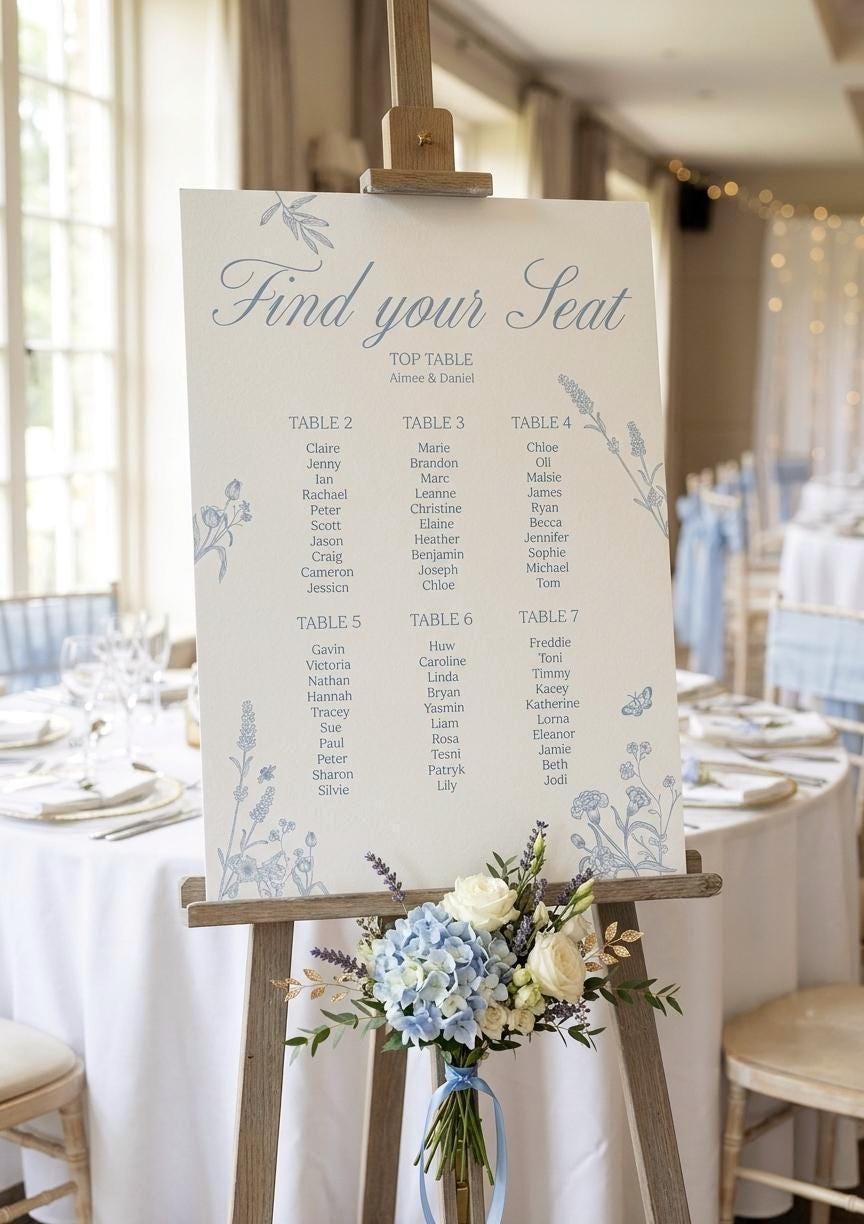
The wedding seating plan is the job most couples put off, and then do in one long evening with a spreadsheet and a pot of tea. It doesn’t have to be painful. This guide walks you through planning who sits where, step by step, then covers the board itself: UK top table etiquette and modern alternatives, round or long tables, alphabetical or by-table layouts, sizes, wording and where to put it on the day.
How to do a wedding seating plan, step by step
Work in this order and the plan almost writes itself. Do the people who matter most first, then fill in around them.
- Wait for your RSVPs. Set your reply-by date a couple of weeks before your venue needs final numbers, and chase anyone who hasn’t answered. Planning seats around maybes means doing it twice.
- Get the floor plan from your venue. Ask how many tables fit the room, what shape they are and how many people each one seats comfortably. Most round tables seat 8–10, but it varies by venue.
- Decide on your top table (or sweetheart table, or family tables: more on those below). This fixes your closest family and wedding party first.
- Place family tables nearest to you. Grandparents, aunts, uncles and parents who aren’t on the top table go closest, so they can see the speeches.
- Group everyone else. Write every guest on a sticky note or a spreadsheet row and sort them into circles: school friends, university friends, work, neighbours, each side’s cousins.
- Fill the tables. Keep couples and families together, put each group at a table where they know at least two or three people, and mix the two sides where friendships cross over.
- Check the practical bits. Elderly guests away from the speakers, wheelchair users near the aisle, parents of babies near the door, and children close to their parents.
- Number or name the tables, then send the final plan to your venue and your stationer on the same day so both are working from one list.
Here’s a worked example for 80 guests: 8 on a traditional top table leaves 72 to seat. At tables of 9 that’s exactly 8 tables; at tables of 8 it’s 9 tables. Ask your venue which fits the room better before you start placing names, because changing table size halfway through is the most common reason plans get redone.
Who sits on the top table at a UK wedding?
The traditional UK top table is a long table facing the room, seating the couple, both sets of parents, the best man and the chief bridesmaid. Looking at it from the guests’ side, the traditional order from left to right is:
| Seat | Traditional top table order |
|---|---|
| 1 | Chief bridesmaid |
| 2 | Groom’s father |
| 3 | Bride’s mother |
| 4 | Groom |
| 5 | Bride |
| 6 | Bride’s father |
| 7 | Groom’s mother |
| 8 | Best man |
It mixes the two families so everyone gets to know each other, and it suits a classic wedding breakfast with speeches from the top table. But it’s only a starting point. Plenty of couples now find it doesn’t fit their family, and that’s fine.
Modern alternatives to the top table
- Sweetheart table. Just the two of you, at a small table facing the room. It avoids any awkward choices about who sits up front, and it gives you a few quiet moments together during the meal.
- Family tables. Each set of parents hosts its own table near the front with their own family and partners. This works beautifully with divorced or separated parents, step-parents and large families.
- Wedding party table. The couple with the bridesmaids, groomsmen and their partners. Livelier than the traditional version, and nobody’s partner is left on another table.
- Long banquet table. In a barn or marquee, some couples skip a top table altogether and sit in the middle of a long table among their guests.
Whichever you choose, write it on the seating plan the same way it will be named in the room: “Top Table”, the couple’s names, or a table name. Our stationery checklist covers everything else you’ll need on the day.
Round tables or long tables?
| Round tables | Long tables | |
|---|---|---|
| Feel | Classic and sociable; everyone can see each other | Relaxed, feasting style; great in barns and marquees |
| Seats | Usually 8–10 per table, depending on size | Flexible: add or remove a place without a new table |
| Conversation | Easy across a small table, harder across a big one | Mostly with the people beside and opposite you |
| Seating plan | List guests under each table number or name | Name each long table; place cards matter more |
Long tables are more forgiving when numbers change, because one extra guest is one extra chair, not a whole new table. Round tables make it easier to group friendship circles. If you go long, you’ll usually have fewer, bigger tables, so guests rely on place cards to find their exact spot.
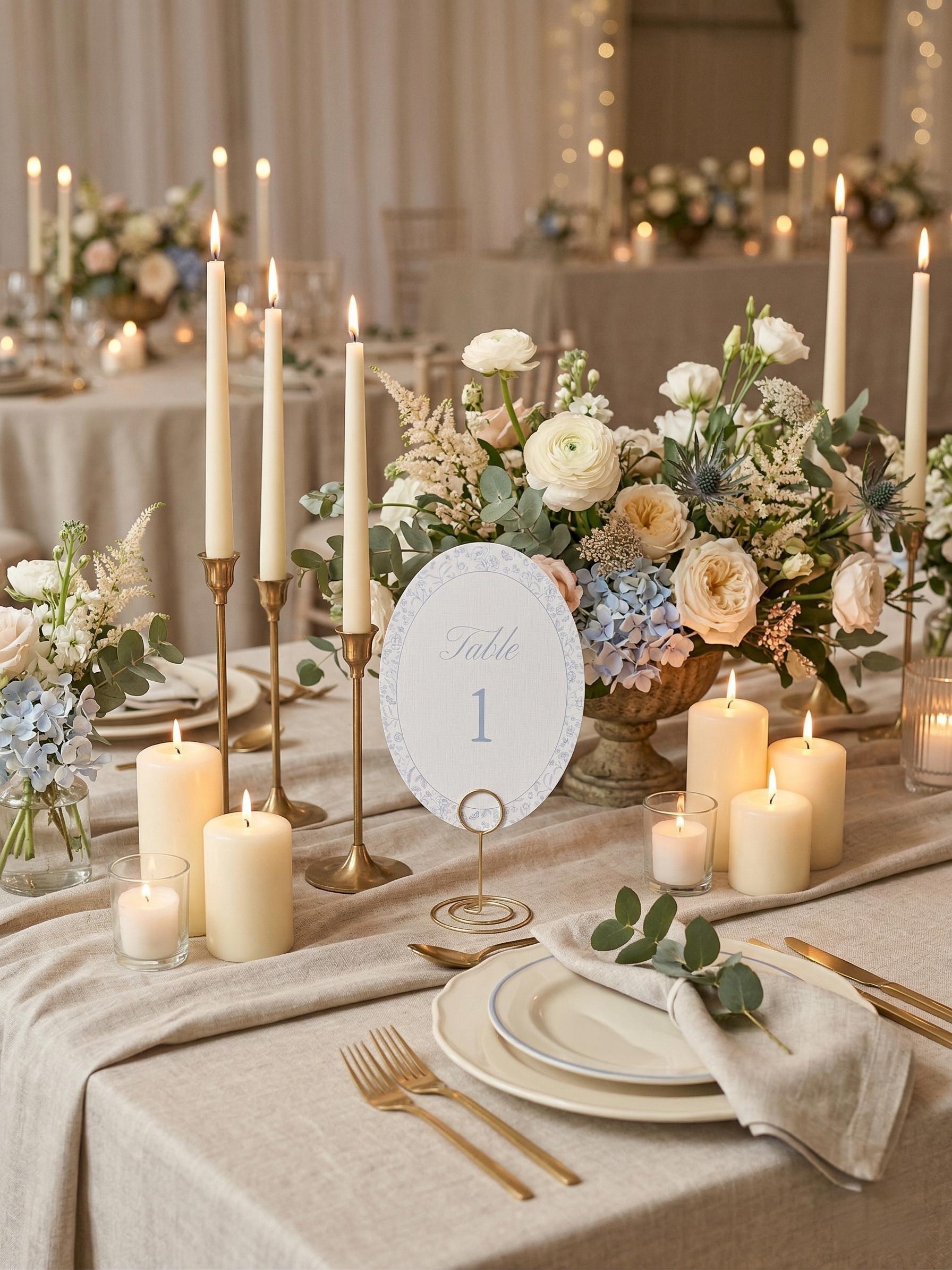
Seating plan layouts: alphabetical or by table?
There are two ways to lay out the names on a wedding seating plan board, and each suits a different wedding.
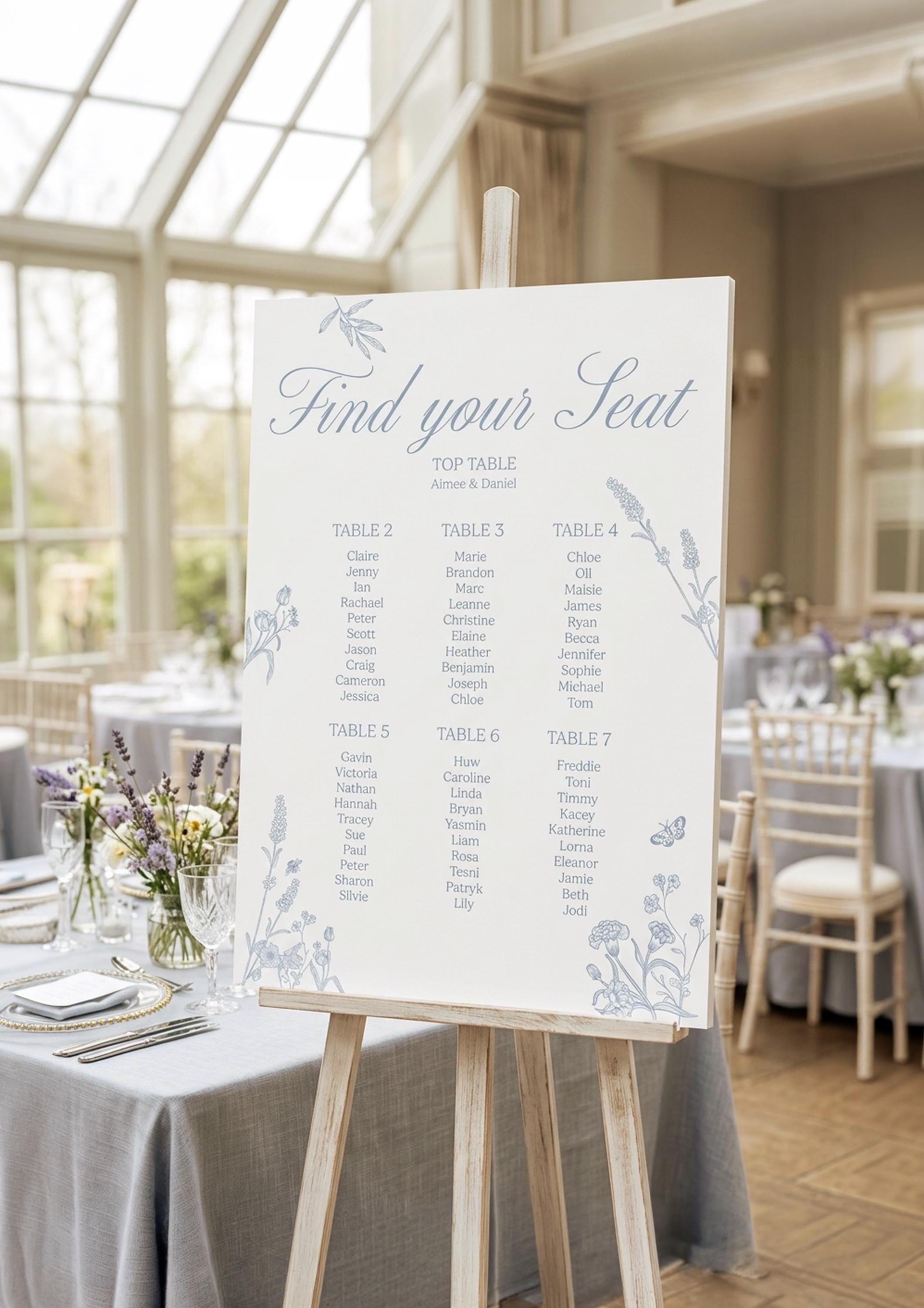
By table
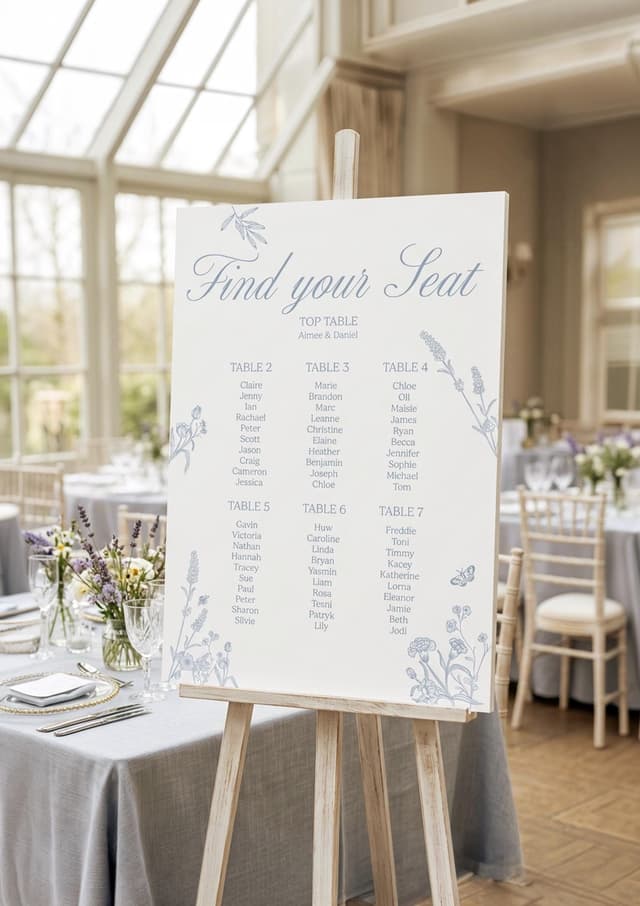
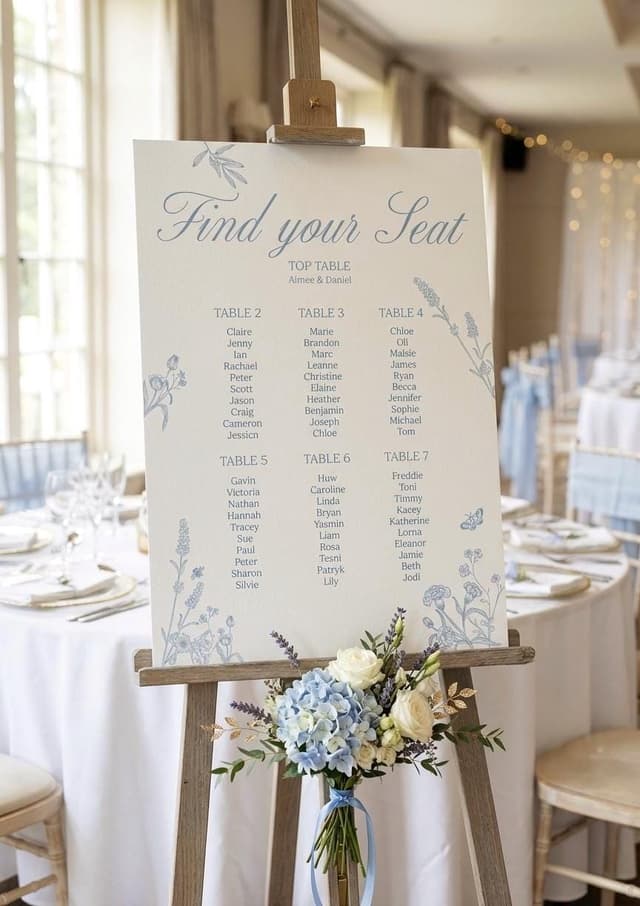
Each table has its own heading, with its guests listed underneath. It’s the classic look, guests can see who they’re sitting with, and it suits weddings of up to about 80–100 guests. List the names alphabetically within each table, so people can scan a column quickly.
Alphabetical order
Every guest is listed A–Z by surname, with their table next to their name: “Davies, Jason & Sarah: Table 4”. Alphabetical is quicker for guests, because each person looks for their own name in one place instead of scanning every table. For weddings over about 100 guests it stops a crowd forming around the board while drinks go warm.
Not sure which to pick? A good rule: if a guest would have to read more than about six columns to find themselves, go alphabetical. We can lay out your names either way when we design your proof.
What size should a wedding seating plan be?
Our seating plan comes in two sizes. At the time of writing, A2 is £65 and A1 is £85; check the product page for current prices.
| Size | Measurements | Best for |
|---|---|---|
| A2 | 420 × 594 mm | Most weddings of up to roughly 80 guests, and smaller spaces |
| A1 | 594 × 841 mm | Larger guest lists, full names, or a board read from further away |
A1 is twice the area of A2, so the extra size goes into bigger, easier-to-read names rather than just more of them. Choose A1 if you have a big guest list, want full names rather than first names, or the board will stand somewhere guests view it from a few steps back. Remember an easel to display it on: it isn’t included, but many venues have one you can borrow.
Where to put the seating plan at your wedding
- Where guests gather during drinks, so they can find their table before they’re called in. Put it out at the start of the drinks reception.
- Near, but not in, the doorway to the wedding breakfast. A board right at the door creates a queue at exactly the wrong moment.
- At eye level on an easel, with space for several people to stand in front of it at once.
- Somewhere well lit. If your drinks are outside, have an indoor spot ready in case of rain.
- Away from the cake and the bar, which draw their own crowds.
Ask your venue coordinator or a reliable usher to set it up. It’s one less thing to remember on the morning.
What to write on a wedding seating plan
The header is the place for a little personality. Keep it short, so the names stay the star. Here are some ideas to copy or adapt:
Find your seat
Please find your seat
Wedding breakfast seating plan
Welcome to the wedding of Aimee & Daniel
Please find your seat
Grab a drink and find your seat
Eat, drink and find your seat
Pull up a chair, you’re family now
Choose a seat, not a side
Two families, one table plan
Underneath the names, you can add a small line like “Dinner will be served at 4pm” or your wedding date. Using table names rather than numbers? Our wedding table name ideas has plenty of inspiration.
Children’s tables: yes or no?
A children’s table works well for children aged about five and over, especially if there are several of a similar age. Put it close to the parents’ tables, so parents can keep an eye on things, and away from the exits and the band’s speakers. Babies and toddlers are happiest on a parent’s knee or in a highchair beside them, so tell your venue how many highchairs you need.
Teenagers usually prefer to sit with the adults, or with their own age group at a ‘young ones’ table. Give the children’s table a fun name, and still give each child a place card: they love finding their own name.
Tricky family situations
Every family has its complications, and the seating plan is where they surface. Some gentle solutions:
- Divorced or separated parents. Give each parent their own table near the front with their partner and family, or choose a sweetheart table. Talk to each of them before the plan is final, so there are no surprises on the day.
- Step-parents. Seat them with their partner, always. Leaving a step-parent off a table that their partner sits at causes far more upset than any etiquette rule.
- Relatives who don’t get on. Put them on different tables, at a similar distance from you, so neither feels moved down the room.
- Plus-ones nobody knows. Seat them beside their partner, at a table with friendly, chatty guests.
- Single friends. Avoid a ‘singles table’. Seat them with people they share something with.
Last-minute changes
Someone will drop out after the plan is printed. It happens at almost every wedding, and guests won’t notice. There’s no need to reprint the whole board for one or two names: remove their place card, ask the venue to clear the setting, and nobody will be any the wiser.
To keep changes to a minimum, order your on-the-day stationery once your RSVPs are in and your venue has your final numbers, ideally around 4 weeks before the wedding. Check every name carefully on your proof, because the seating plan is printed exactly from the list you send. Making on-the-day stationery often takes 1–2 weeks once the proof is approved; see our delivery and lead times for current timings.
Do you need a seating chart and place cards?
It depends on whether you’re allocating tables or seats. The seating plan tells guests which table; the table number tells them where that table is; the place card tells them which seat.
- Tables only: a seating plan and table numbers are enough. Guests choose their own seat at their table.
- Exact seats: add place cards so each guest knows where to sit.
- Pre-ordered meals: place cards are essential, because the catering team uses them to know who ordered what. Some couples add a small, discreet mark for each meal choice.
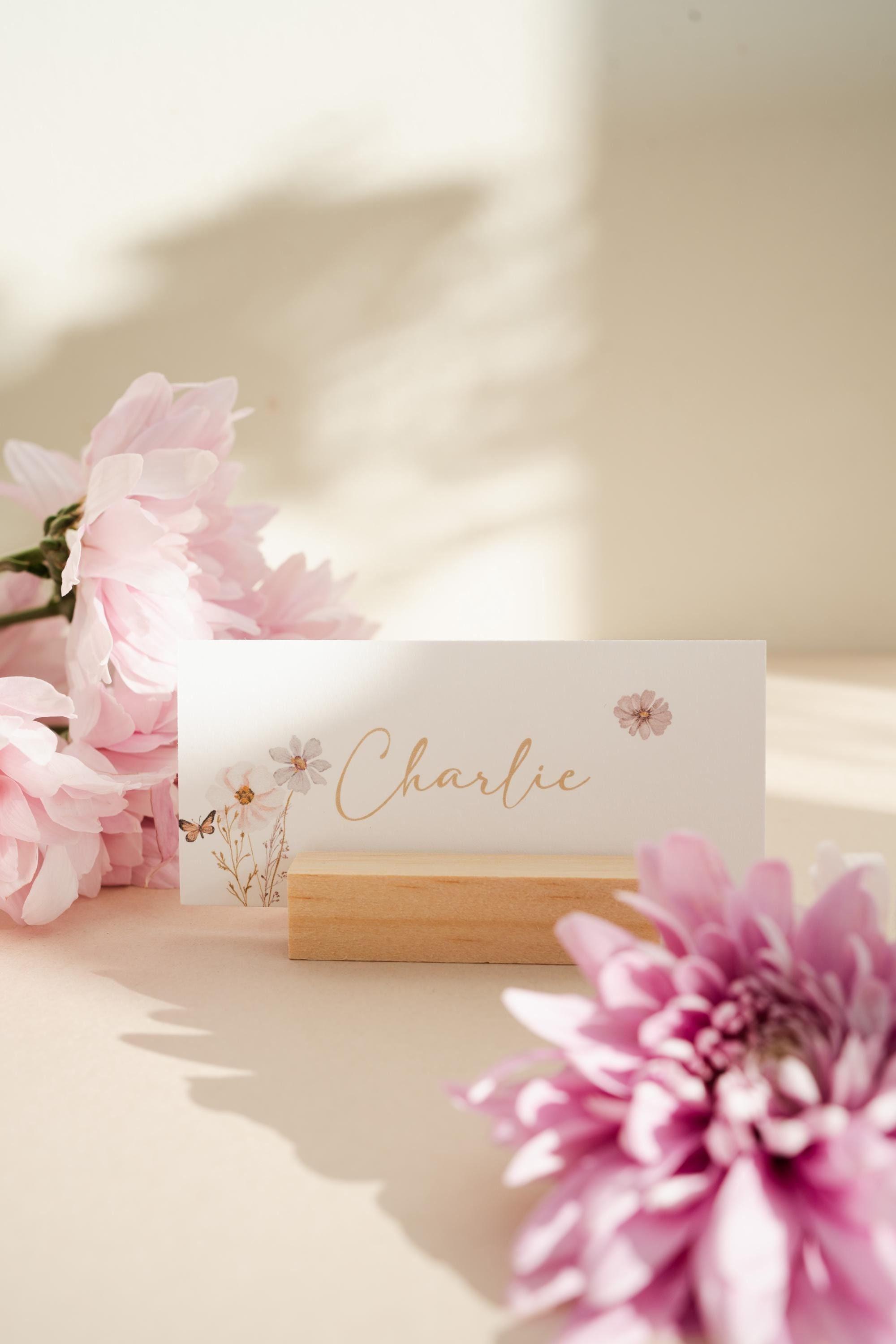
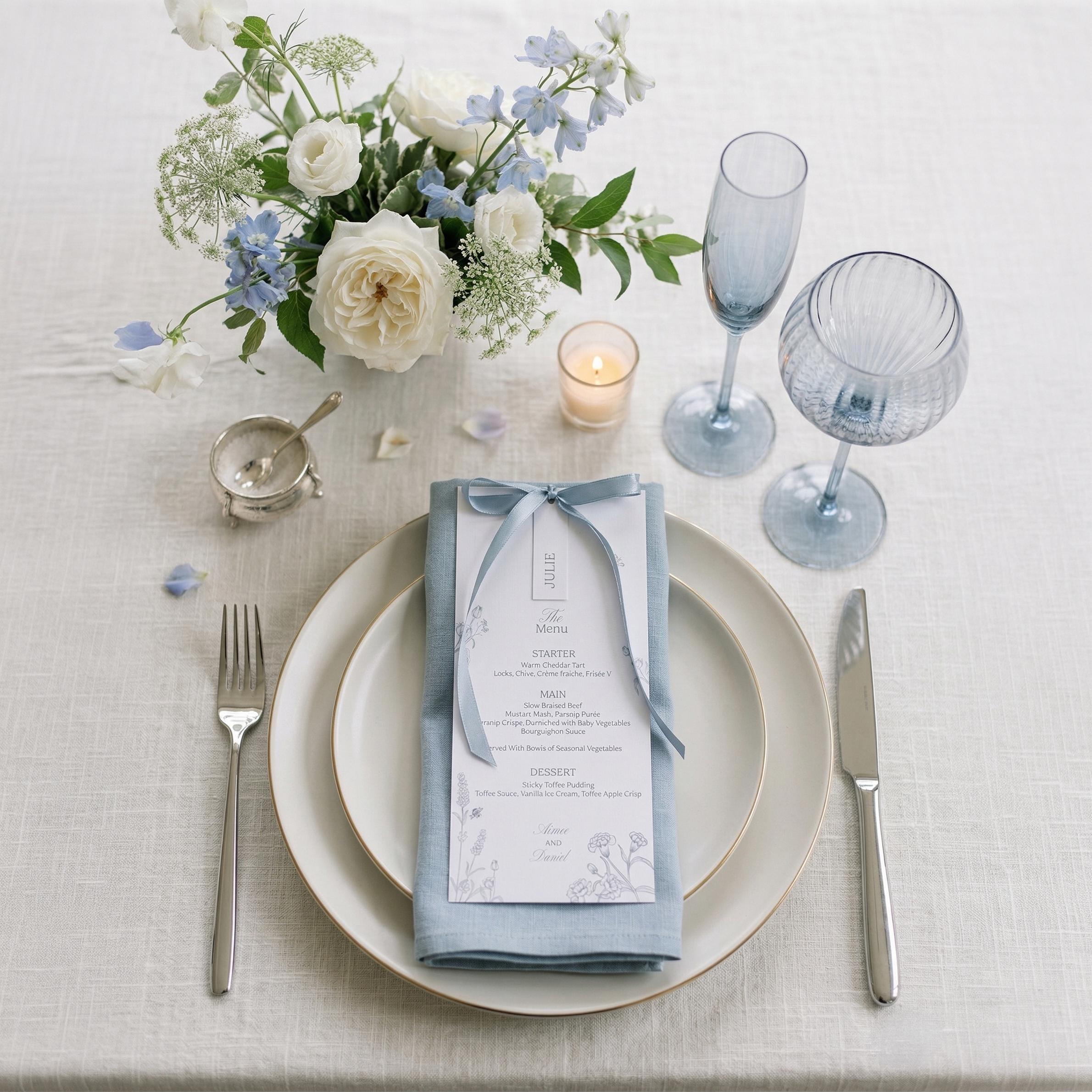
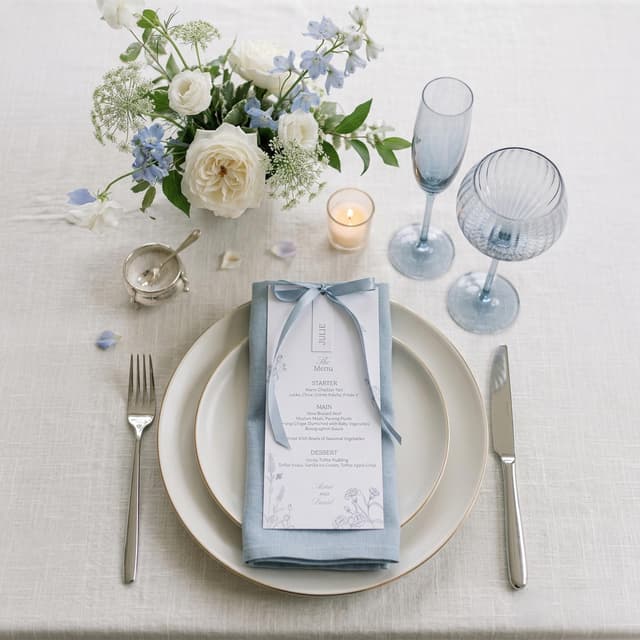
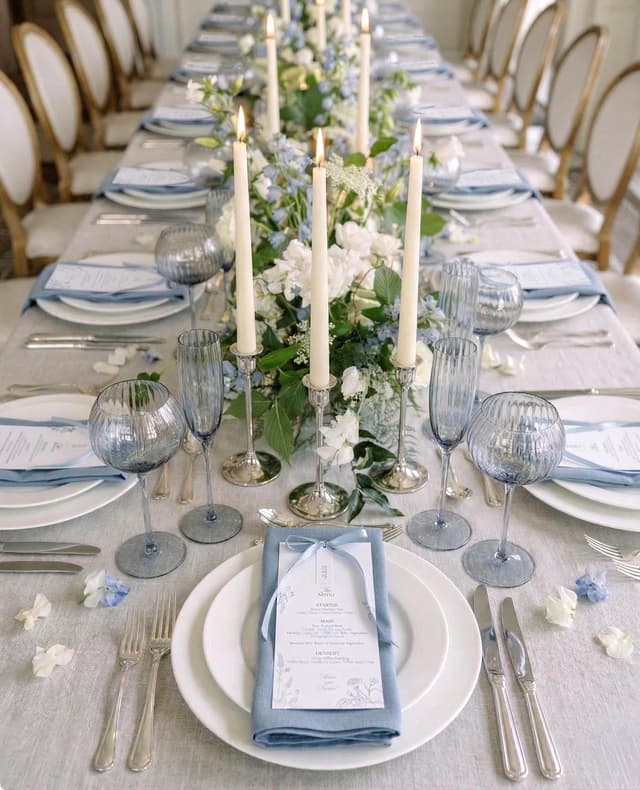
Want to save a piece? A named menu works as menu and place card in one. Our botanical menu and place card designs put each guest’s name on a little tag tied to the top of their menu, so you only need one piece per setting. See our menu wording ideas for what to write.
Find your matching seating plan
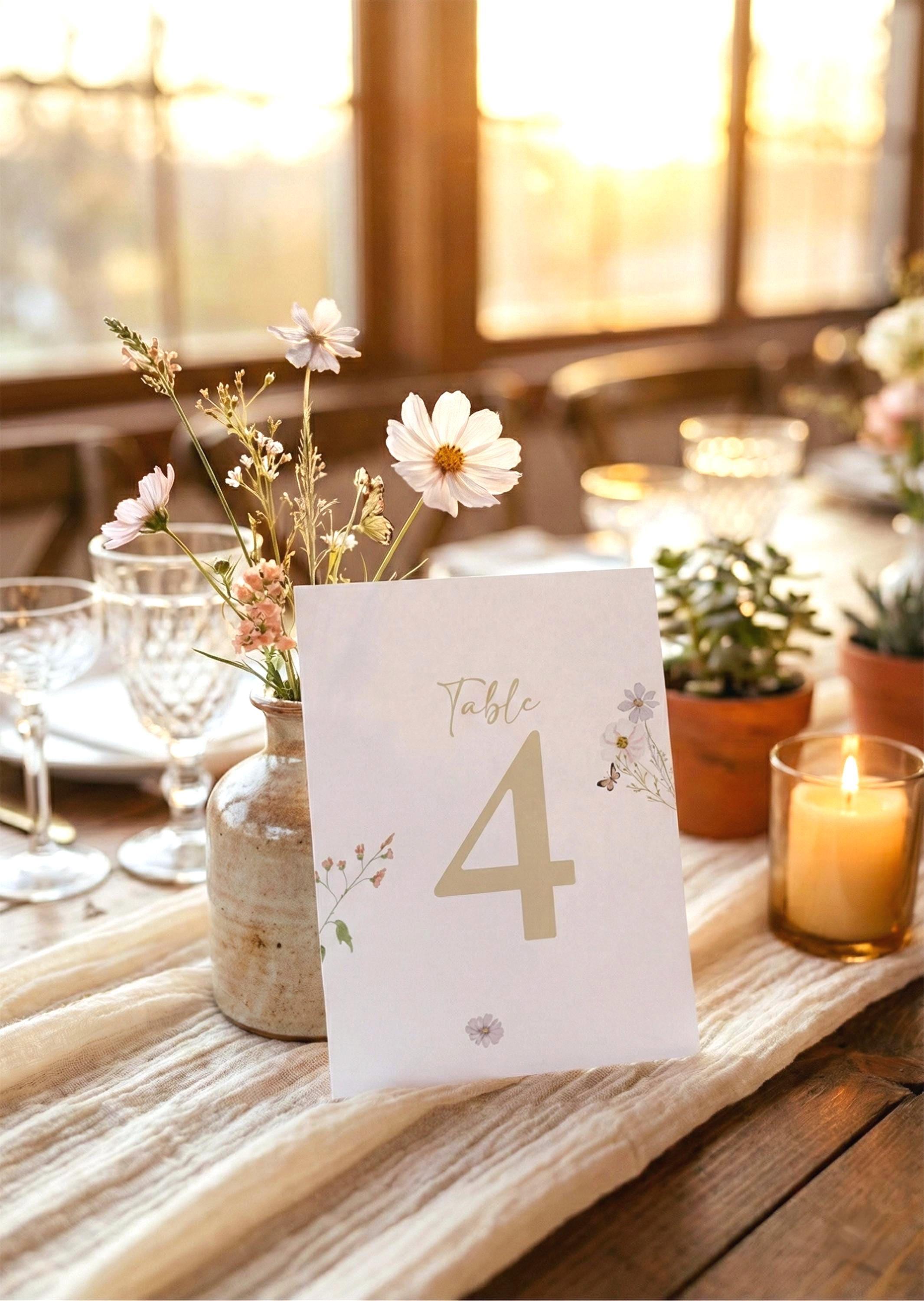
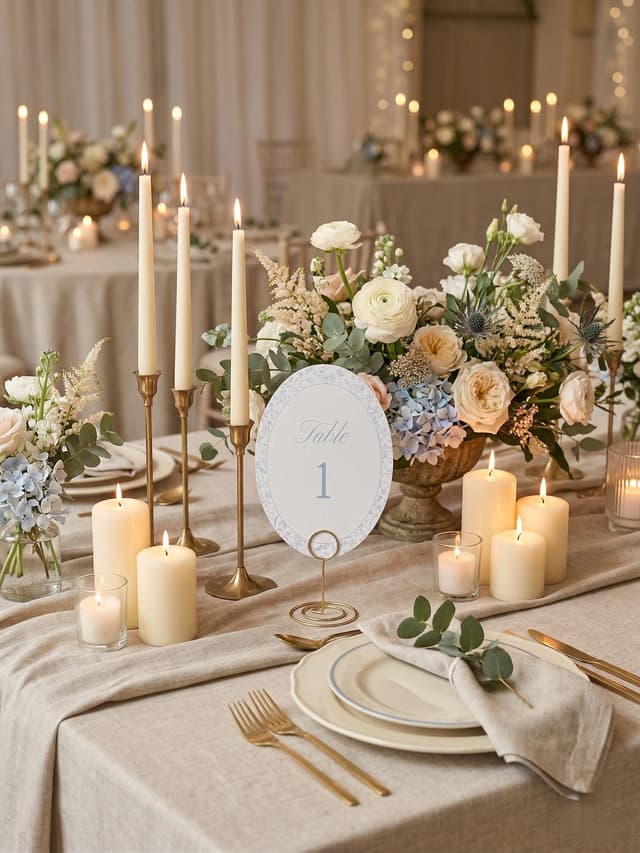
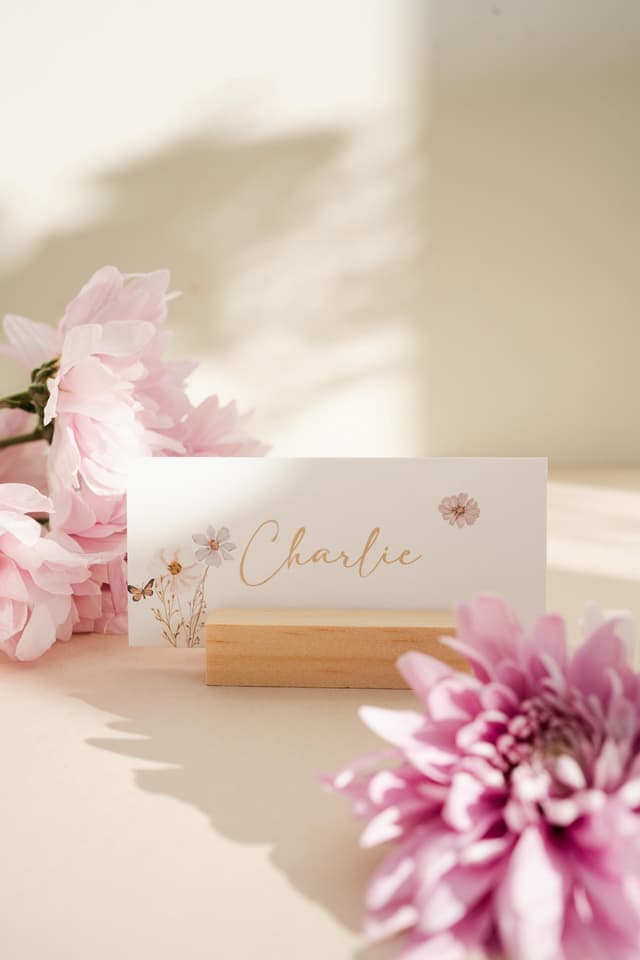
Everything looks most considered when the seating plan, table numbers, place cards and menus share one design. Our blue floral seating plan pairs with dusty blue table numbers and botanical menus, and you’ll find more on-the-day pieces in table numbers and place cards.
Frequently asked questions
How do you do a wedding seating plan?
+
Wait for your RSVPs, get your venue’s floor plan, then decide on your top table. Seat close family nearest to you, group the rest of your guests by the circles they know, keep couples together, and check practical needs like access and children before sending the final list to your venue and stationer.
Who sits on the top table at a wedding in the UK?
+
Traditionally the couple, both sets of parents, the best man and the chief bridesmaid. From left to right as guests see it: chief bridesmaid, groom’s father, bride’s mother, groom, bride, bride’s father, groom’s mother, best man. Sweetheart tables and family tables are popular modern alternatives.
Should a wedding seating plan be alphabetical or by table?
+
Alphabetical by surname is quicker for guests, because they look for their own name in one place, and it suits weddings of over about 100 guests. By table is the classic look and works well for smaller weddings; list names alphabetically within each table.
What size should a wedding seating plan be?
+
A2 (420 × 594 mm) suits most smaller and medium weddings. A1 (594 × 841 mm) is better for larger guest lists, full names or a board read from further away. Our seating plan comes in both sizes.
Where should the seating plan go at a wedding?
+
Where guests gather during the drinks reception, at eye level on an easel, near but not blocking the door to the wedding breakfast. Put it out at the start of drinks so guests can find their table before they’re called in.
Do you need place cards if you have a seating chart?
+
Only if you’re allocating exact seats or serving pre-ordered meals. If guests just have a table, a seating plan and table numbers are enough. A named menu can double as a place card.
What do you write on a wedding seating plan?
+
A short header such as “Find your seat”, “Please find your seat” or “Choose a seat, not a side”, followed by each table’s number or name and the guests sitting there. Some couples add their names and wedding date.
Where do divorced parents sit at a wedding reception?
+
A common solution is to give each parent their own table near the front with their partner and family, or to choose a sweetheart table so nobody has to share the top table. Talk to both parents before the plan is final.
More from the Journal
8 min read
Evening Wedding Invitation Wording (UK): Examples, Etiquette and What to Write
Evening wedding invitation wording for UK weddings: formal, relaxed and fun examples, what to write, timings, and RSVPs for evening guests.
6 min read
How to Word No Children at a Wedding: Polite Adults-Only Wording (UK)
How to word no children at a wedding politely: where to say it, adults-only wording for invitations, details cards and websites, and what to say if asked.
7 min read
RSVP Wording for Weddings (UK): Examples for RSVP Cards, Wedding Websites and Polite Reminders
RSVP wording for weddings: UK examples for RSVP cards, menu choices, dietary needs, plus ones, song requests and QR codes, and how to chase late replies.
7 min read
How Many Wedding Invitations Do I Need? A Step-by-Step Calculator for 30 to 200 Guests
How many wedding invitations do you need? Count households, not guests: a step-by-step method, tables for 30–200 guests, spares, evening invites and RSVPs.
8 min read
Dusty Blue Wedding Ideas: Colour Palettes, Decor and Stationery for a Dusty Blue Wedding Theme
Dusty blue wedding ideas: colour palettes that pair with dusty blue, flowers, table decor, bridesmaids, and dusty blue wedding invitations, menus and envelopes.
6 min read
Autumn Wedding Stationery Ideas: Invitations, Colours and Table Stationery for a UK Autumn Wedding
Autumn wedding stationery ideas: autumn colour palettes, invitation motifs, envelope colours, wax seals, when to send invitations, and ideas for barn weddings.
6 min read
Wax Seal Wedding Invitations, Vellum and Ribbon: The Finishing Touches Explained
Wax seal wedding invitations, vellum wraps and ribbon explained: self-adhesive vs traditional wax, seal colours, satin vs silk ribbon and UK postage.
9 min read
How to Assemble Wedding Invitations: Stacking Order, Vellum, Ribbon and Wax Seals, Step by Step
How to assemble wedding invitations step by step: the stacking order, which way cards face, vellum, ribbon, wax seals, RSVP cards and the envelope, with timings.
6 min read
Wedding Invitation Samples: Why to Order Them First and What to Look For in a Sample Pack
Why order wedding invitation samples first: what’s in a sample pack, standard vs personalised samples, how to judge one, and when to order.
7 min read
Bespoke vs Semi-Custom Wedding Stationery: Which Is Right for You?
Bespoke wedding stationery or semi-custom? An honest UK comparison of cost, time, proofs and uniqueness, what you can change, and questions to ask a stationer.
8 min read
Destination Wedding Invitations (UK): Timeline, What to Include and Wording Examples
Destination wedding invitations for UK couples marrying abroad: when to send them, what to include, copyable wording examples, design ideas and posting tips.
7 min read
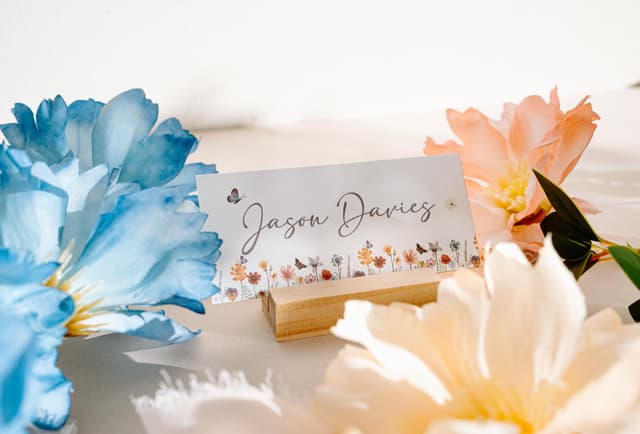
Wedding Place Card Ideas: Styles, Sizes, Wording and How to Lay Them Out
Wedding place card ideas for UK couples: flat, tent and named menu styles, meal markers, sizes, what to write, children’s cards and how to lay them out.
9 min read
How to Address Wedding Invitations (UK): Envelope Etiquette for Couples, Families and Plus Ones
How to address wedding invitations in the UK, with exact envelope examples for married and unmarried couples, families, plus ones, titles and evening guests.
6 min read
How Much Do Wedding Invitations Cost in the UK? Real Prices and Worked Examples for 100 Guests
How much do wedding invitations cost in the UK? Real prices per invite and per guest, costed examples for 100, 150 and 200 guests, postage and ways to save.
7 min read
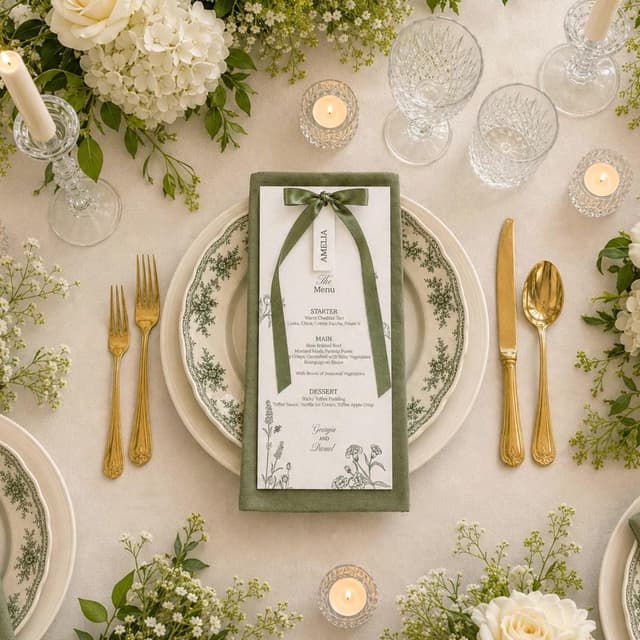
Wedding Menu Wording Ideas: Example Menus, Dietary Symbols and Menu Card Ideas (UK)
Wedding menu wording examples to copy: three-course, sharing, alternate drop, choice, evening and drinks menus, plus dietary symbols, sizes and place card ideas.
8 min read
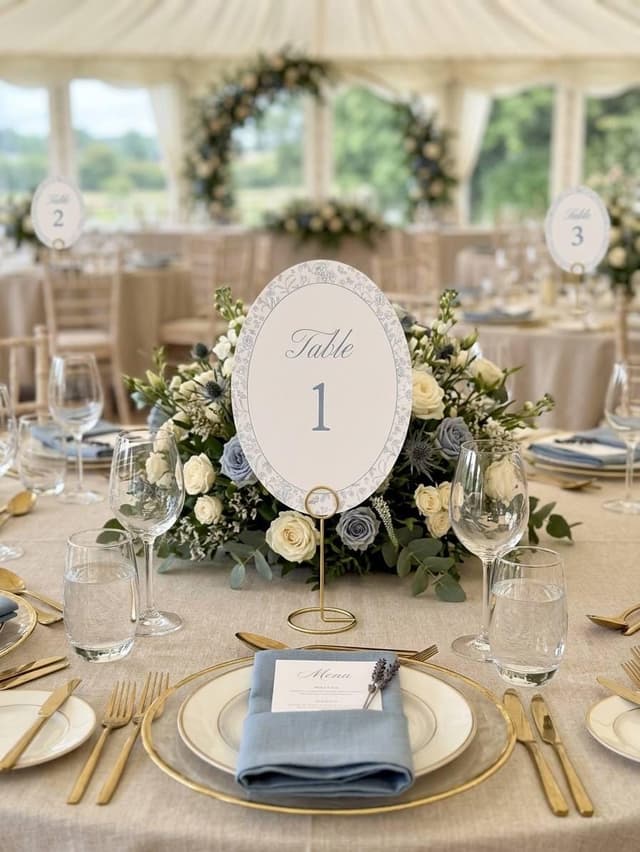
Wedding Table Name Ideas: 17 Themes and 200+ Names to Use Instead of Numbers
Over 200 wedding table name ideas instead of numbers: wildflowers, UK places, travels, love words, songs, films, drinks and more, plus how to choose them.
10 min read
How to Ask for Money as a Wedding Gift: Polite Wording and Poems (UK)
How to politely ask for money as a wedding gift in the UK: where to put it, copy-and-paste wording, short and funny poems, plus no gifts and charity wording.
6 min read
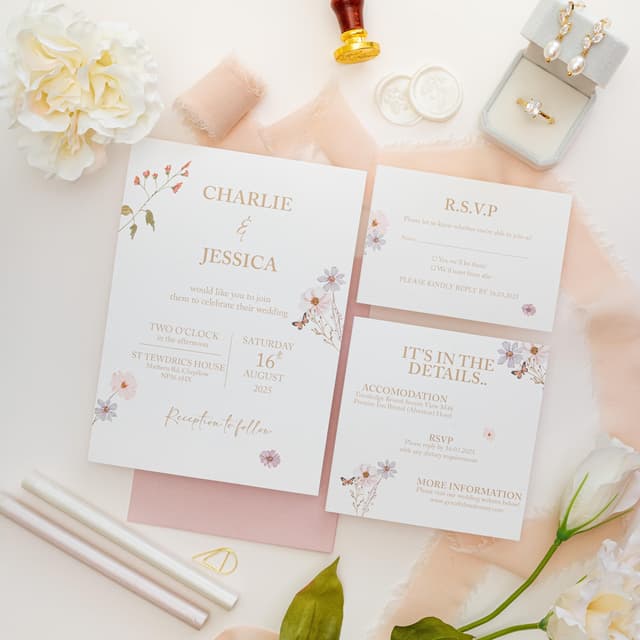
What to Put on a Wedding Details Card: Wording Examples, Size and a Full Example
What to put on a wedding details card: accommodation, travel, timings, dress code, gift list, RSVP and QR code, plus wording examples, a full example and sizes.
8 min read
Save the Date Wording (UK): What to Write, With 25+ Examples
UK save the date wording examples: classic, relaxed, funny, destination and evening guests, plus what to put on a save the date, who gets one and when to send it.
7 min read
Wedding Stationery Trends 2027: The Invitations, Colours and Details Couples Are Choosing
Wedding stationery trends 2027 from our UK studio: wildflowers, dusty blue toile, ovals, satin bows, wax seals, vellum, named menus and 2027 colour schemes.
9 min read
What to Write in a Wedding Thank You Card: UK Wording Examples for Every Guest
What to write in a wedding thank you card: UK wording examples for money, gifts, parents, guests who didn’t attend, no gift, and when to send them.
5 min read
How to Choose Wedding Invitations: A UK Guide to Style, Size, Paper and Finishing Touches
How to choose wedding invitations in the UK: matching the style to your venue, picking colours, standard invitation sizes (5×7, A5 or A6), paper weight, wax seals, vellum and ribbon, and how to check your proof.
5 min read
The Wedding Stationery Checklist (UK): What You Need, What’s Optional and How Many to Order
A complete UK wedding stationery checklist: what you really need, what’s optional on the day, what to skip, and exactly how many invitations, RSVPs, menus and place cards to order, with a worked example.
5 min read
Wedding Invitation Wording Examples (UK): Formal, Relaxed & Everything Between
Copy-and-paste UK wedding invitation wording for every situation: couples hosting, parents hosting, church and civil ceremonies, evening receptions, destination weddings, plus RSVP and details card wording.
3 min read
When to Send Wedding Invitations in the UK (Plus Save the Dates & RSVPs)
When to send save the dates, wedding invitations and evening invitations in the UK, when to set your RSVP date, and when to order your stationery, with a month-by-month timeline and worked examples.
3 min read
Wildflower Wedding Stationery Ideas: From Invitations to the Table
Wildflower wedding stationery ideas for a meadow-inspired day: colour palettes, envelope pairings, matching menus, table numbers and place cards, seasonal UK flowers and finishing touches.