
The Journal · 5 min read
How to Choose Wedding Invitations: A UK Guide to Style, Size, Paper and Finishing Touches
By Beth, founder of Graceful Studio · Updated
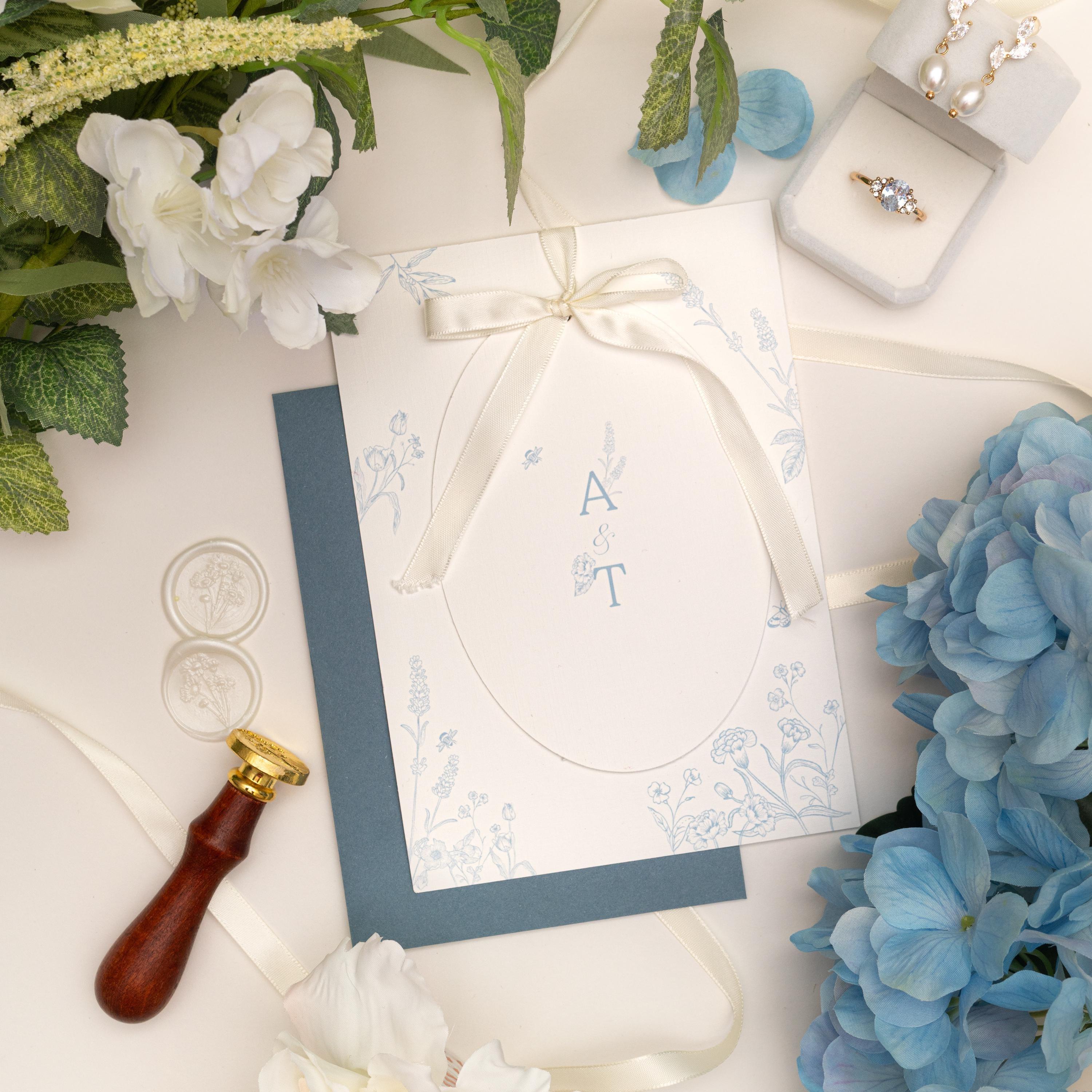
Your invitation is the first thing guests hold, months before they see a single flower. It tells them how formal the day will be, what to wear and what kind of celebration to expect. Choosing one is easier than it looks once you make the decisions in the right order, and that’s exactly what this guide walks you through.
Choose in this order
Most couples start by scrolling designs. It’s more fun, but it’s quicker to decide the practical things first and let them narrow the choice for you:
- Count your households, not your guests. This sets your quantity and most of your budget (our stationery checklist shows how).
- Let your venue and season lead. A barn in October and a beach in Greece call for very different invitations.
- Pick two or three colours, taken from your flowers or bridesmaid dresses.
- Choose a style that fits all of the above.
- Decide the size and the extras: details card, RSVP, ribbon, vellum, wax seal.
- Order a sample to check the card, colours and print in person.
- Check your proof line by line before anything is printed.
Match the style to your venue and season
The quickest way to a design you’ll still love in ten years is to let it echo where you’re getting married. Here’s how popular wedding invitation styles pair with UK venues:
| Your wedding | Invitation style that suits it | Look for |
|---|---|---|
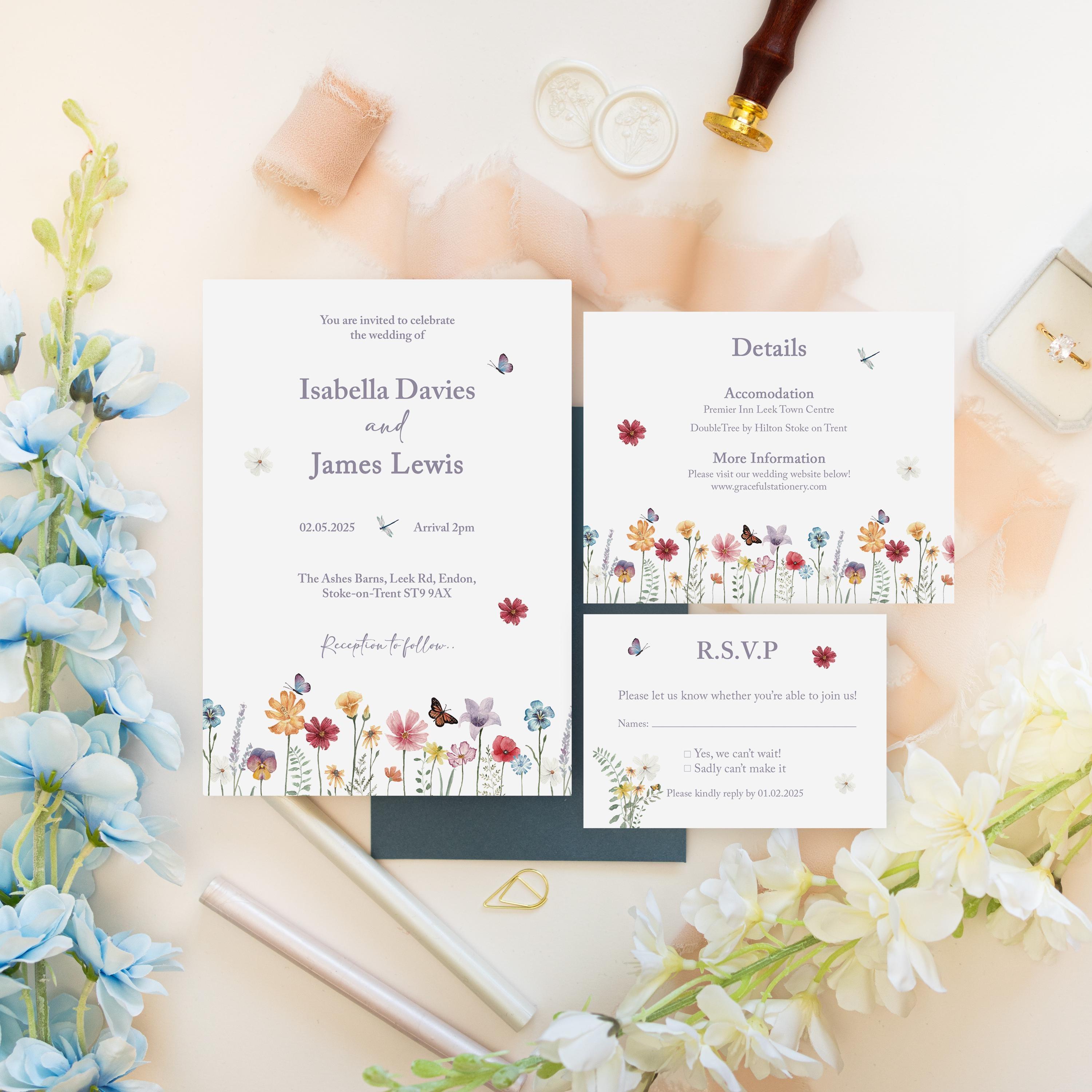
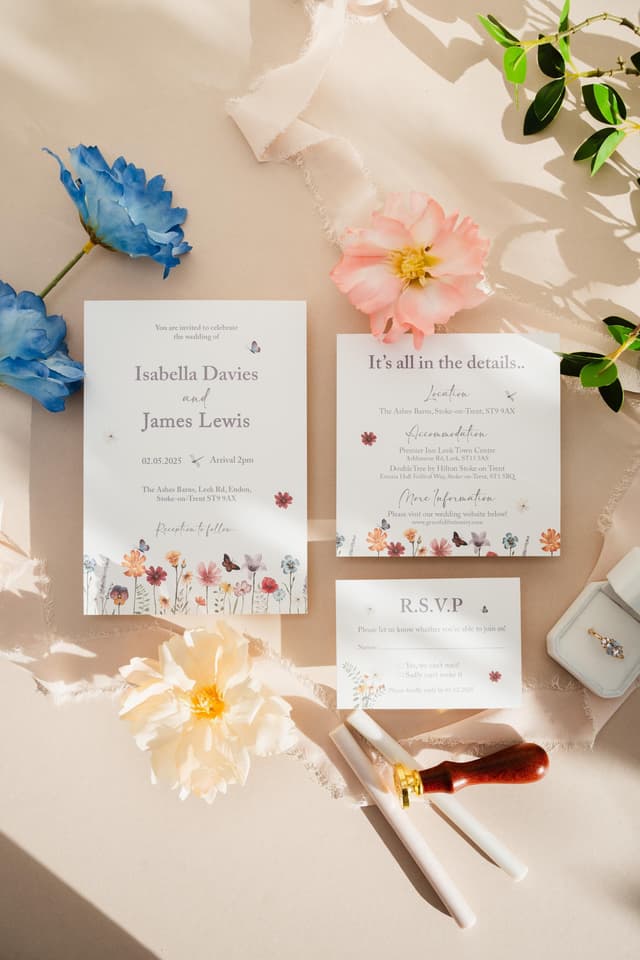
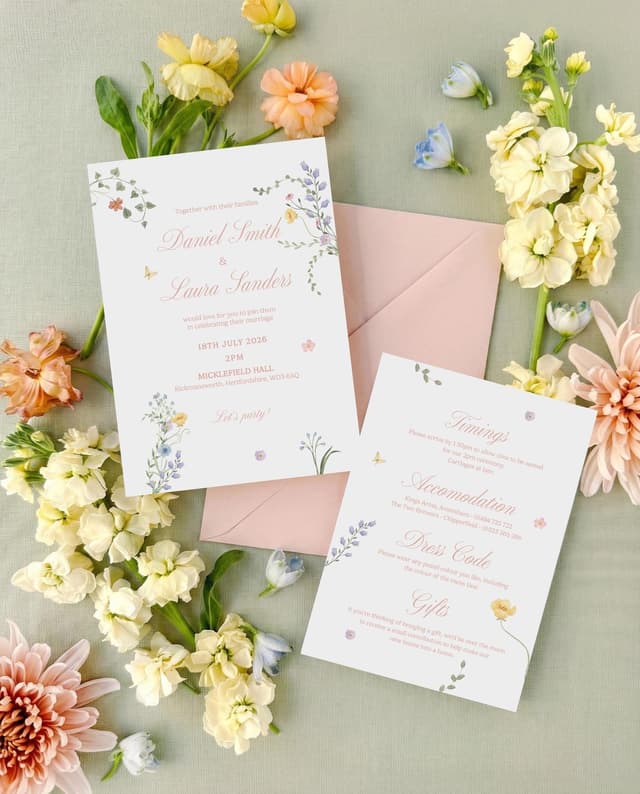
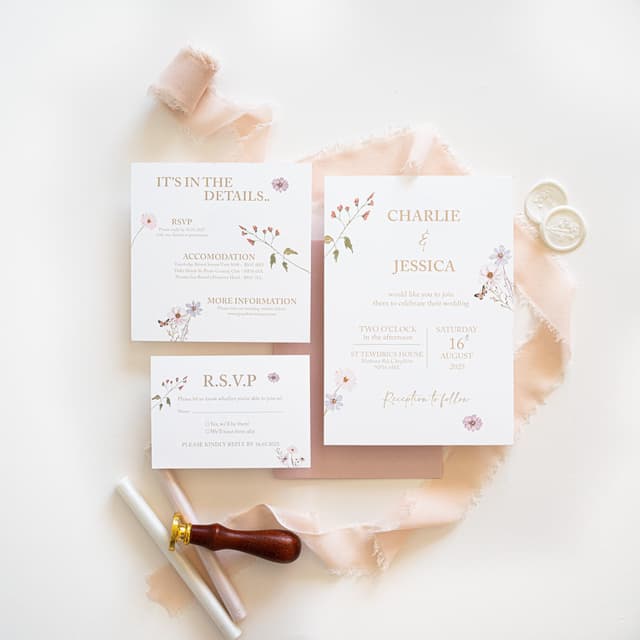
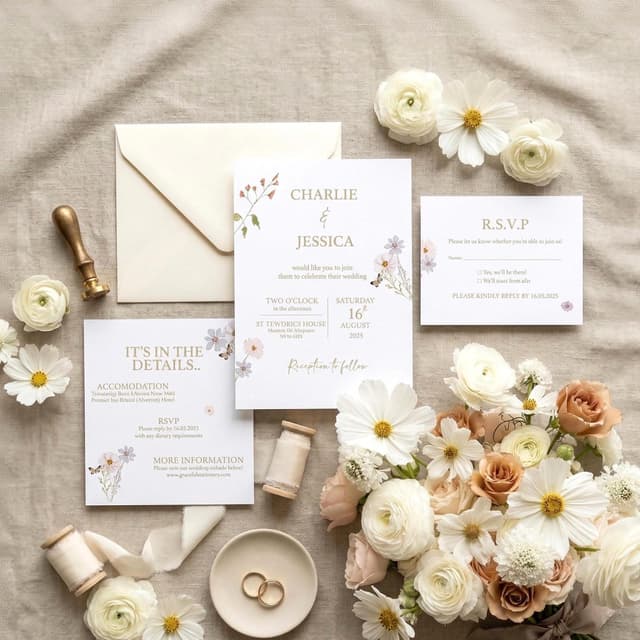
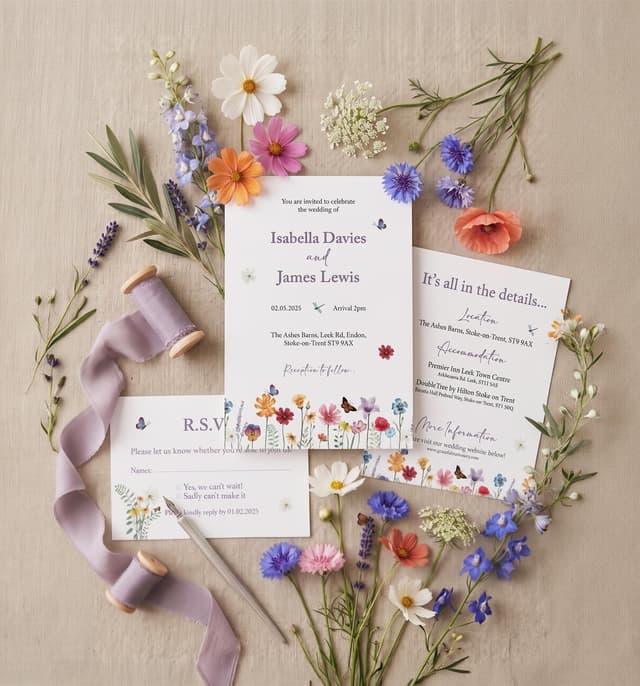
| Country house, garden or marquee | Wildflower and botanical | Loose watercolour flowers, butterflies, soft pastels |
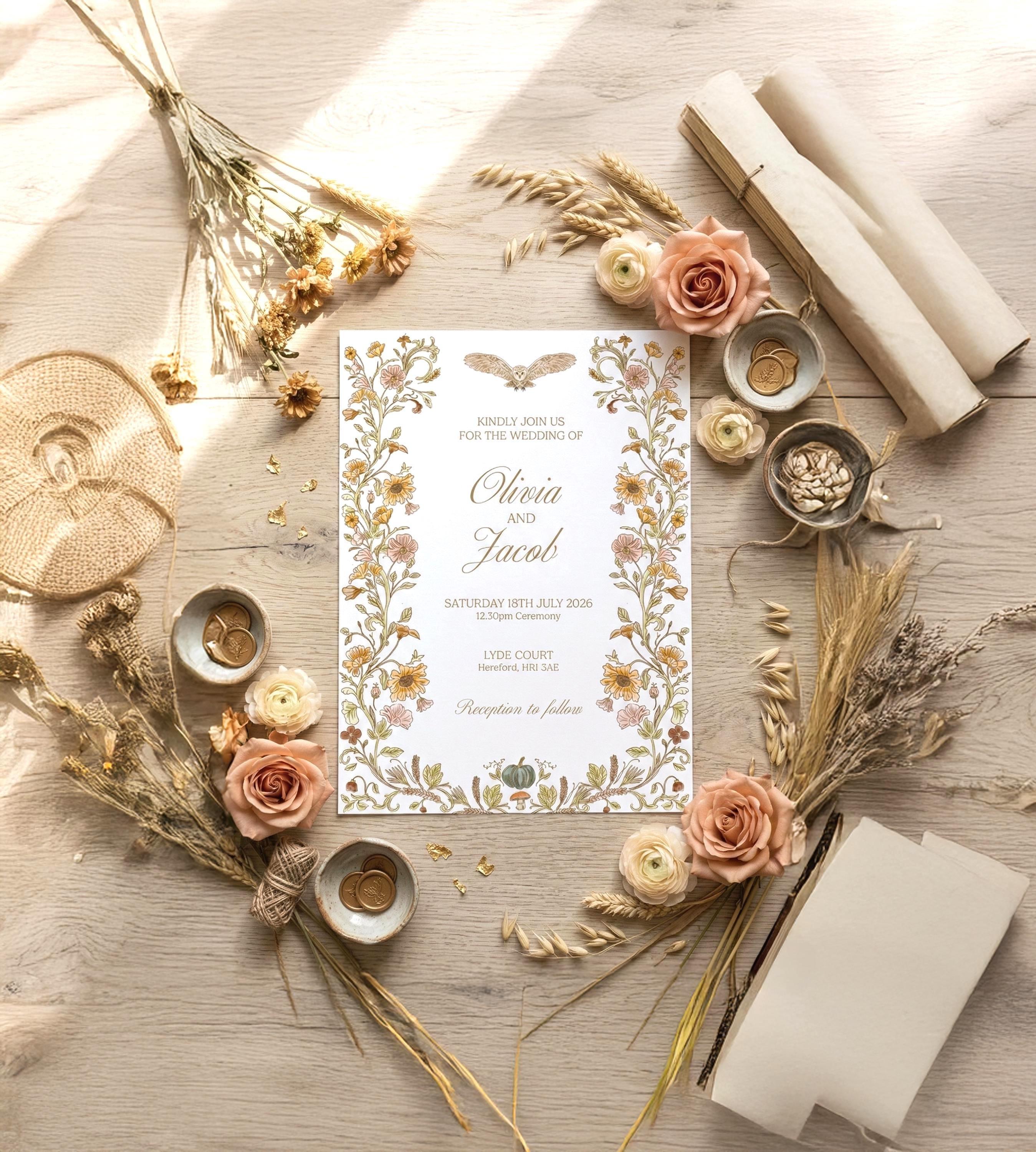
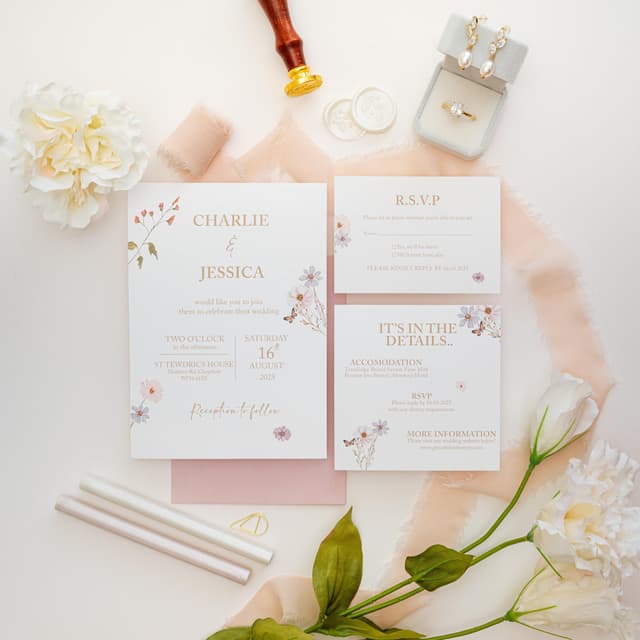
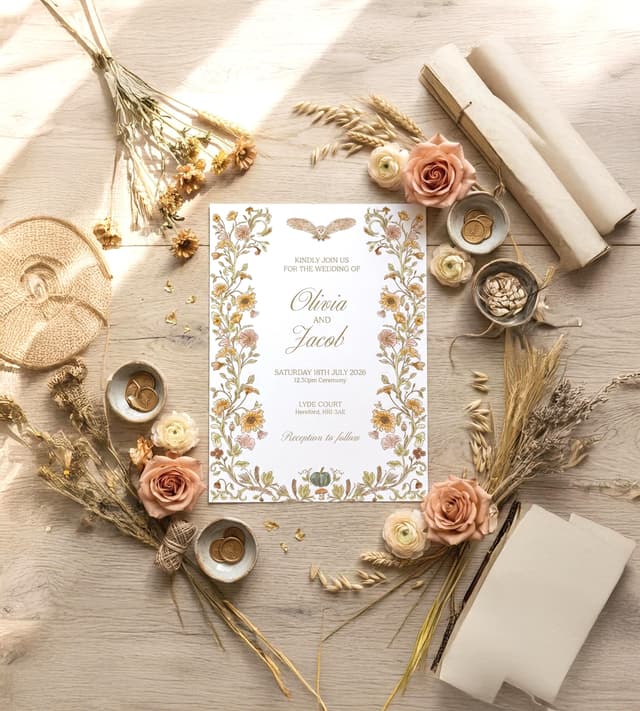
| Barn or autumn wedding | Warm, rustic florals | Sunflowers, wheat, terracotta and ochre, gold wax seals |
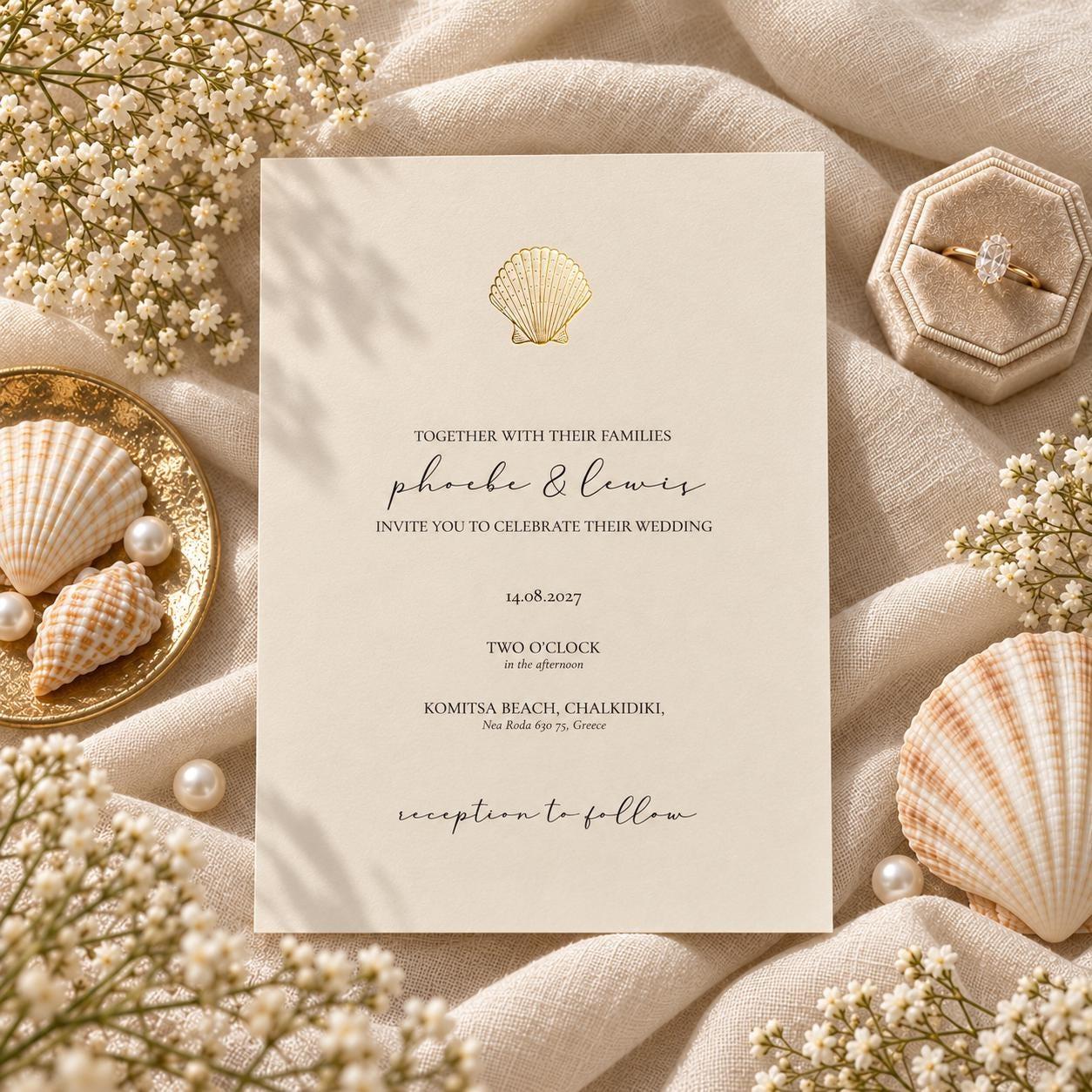
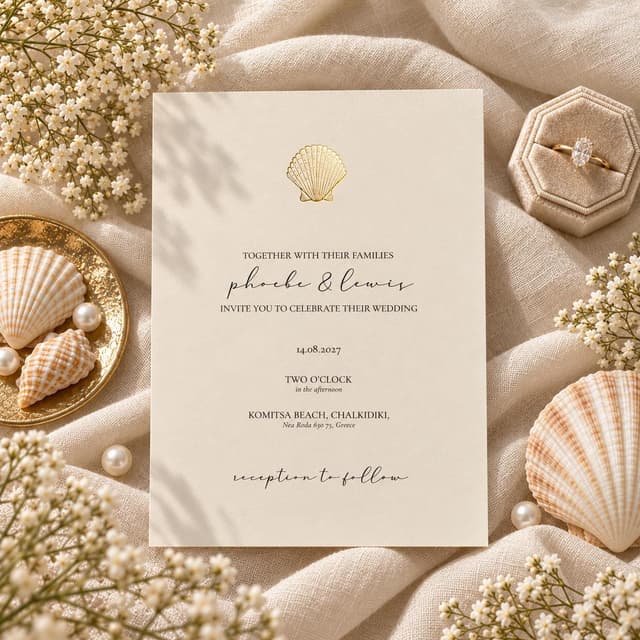
| Beach or destination wedding | Minimal with one luxe detail | Cream card, a single gold foil motif, lots of white space |
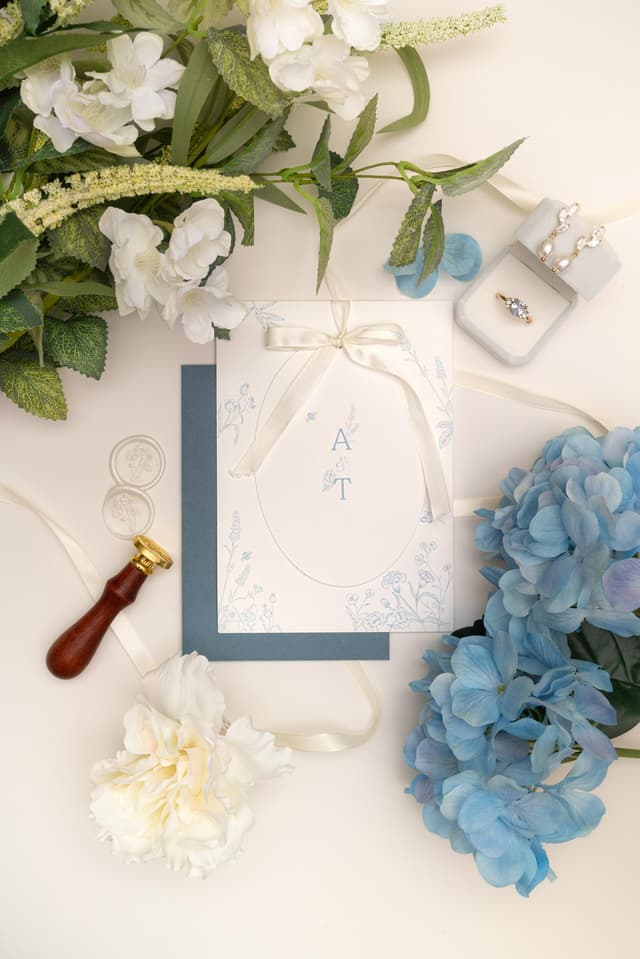
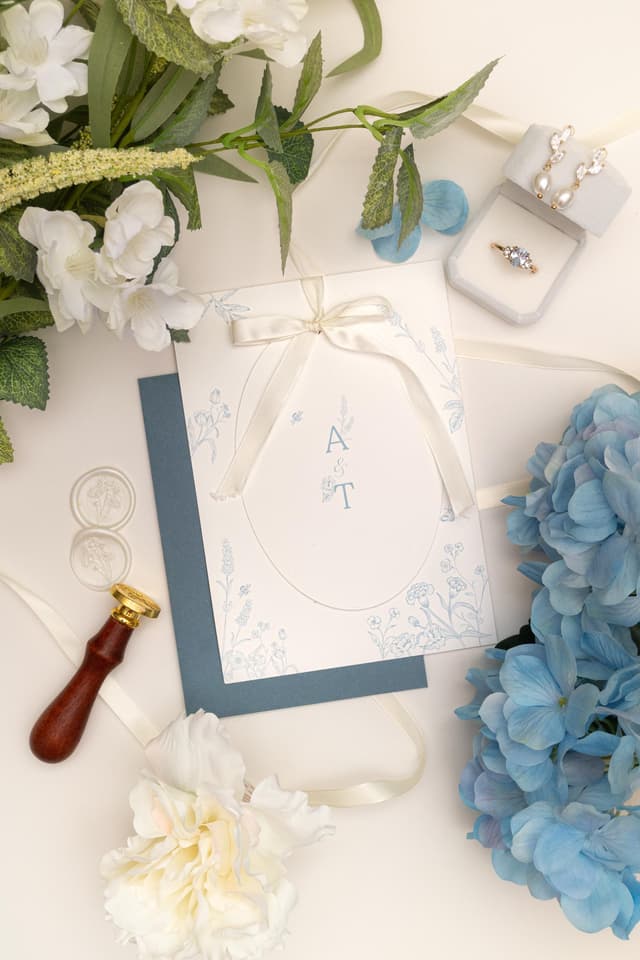
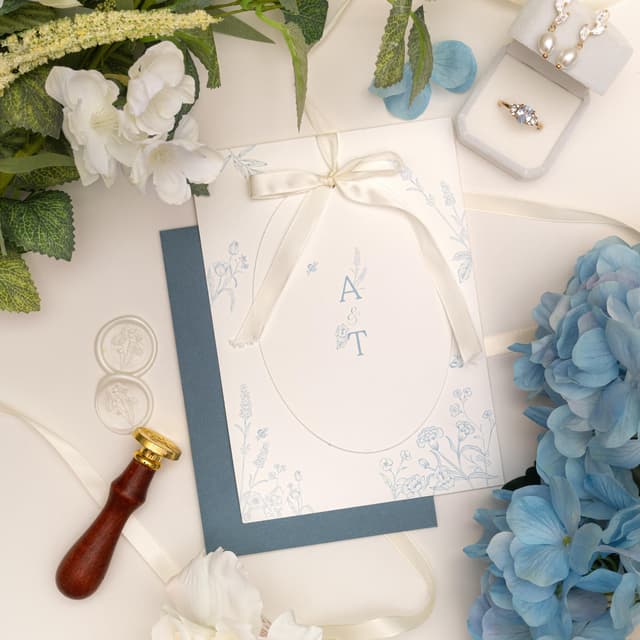
| Church, hotel or classic venue | Fine-line toile and oval frames | Blue and white illustration, monograms, satin ribbon |
| Spring or summer, relaxed feel | Pastel and illustrated | Blush, lilac and butter yellow, playful details |
Choosing your colour scheme
Two or three colours is plenty: one main colour, one soft neutral and perhaps an accent. Take them from things you’ve already chosen, like your flowers, bridesmaid dresses or the venue itself, so the whole day ties together without trying too hard.
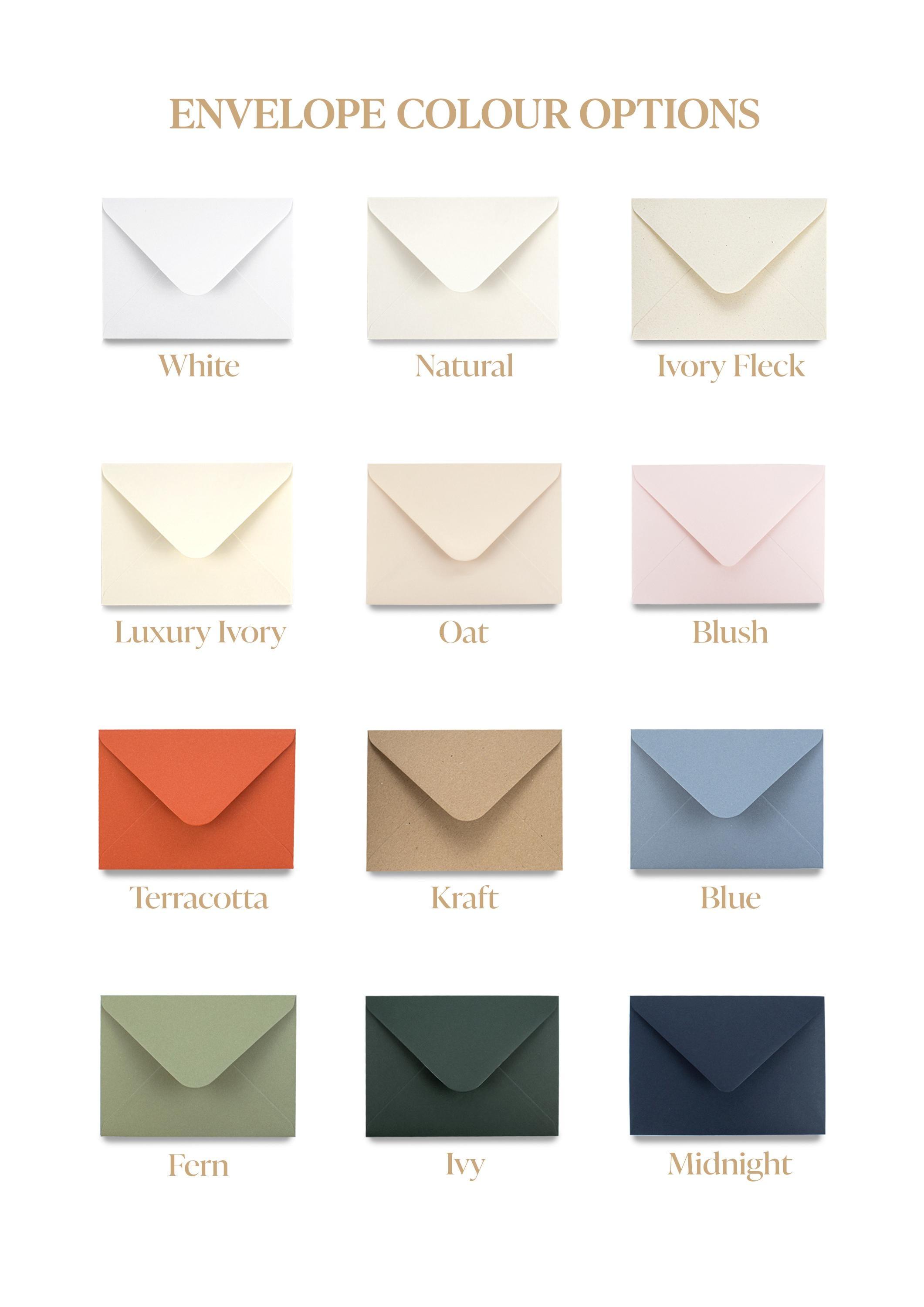
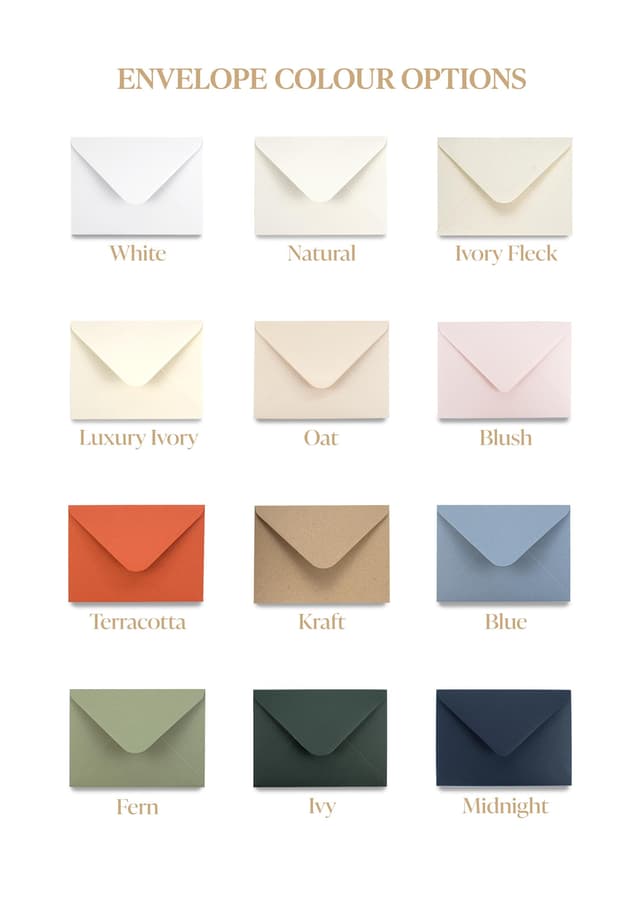
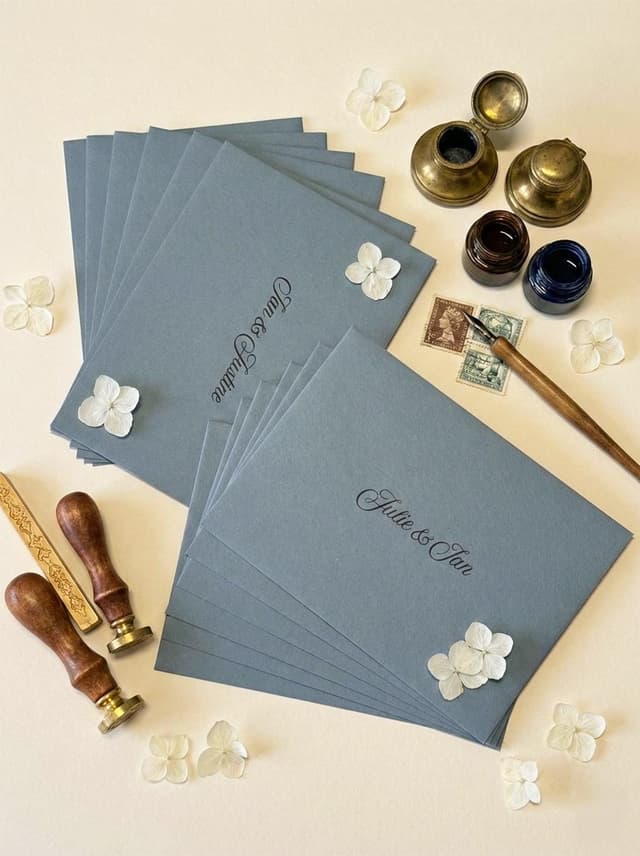
Don’t forget the envelope. It’s the very first thing guests see, and a coloured envelope is the simplest way to add your accent colour. We offer twelve envelope colours, from white and ivory to blush, terracotta, fern and midnight.
What size should wedding invitations be?
The standard wedding invitation size in the UK is 5×7 inches (127 × 178 mm). It feels generous in the hand, fits a standard 5×7 envelope with the RSVP and details cards tucked in, and sits comfortably within Royal Mail’s Letter size. Here’s how the common sizes compare:
| Size | Measurements | Best for |
|---|---|---|
| A6 | 105 × 148 mm | Save the dates, evening invitations, small RSVP and details cards |
| 5×7 inches | 127 × 178 mm | Main invitations. The UK favourite, and the size we use |
| A5 | 148 × 210 mm | Statement invitations and menus. Lovely, but needs a bigger envelope |
Is A5 too big for a wedding invitation? Not too big, but it’s a commitment. A5 needs a C5 envelope, which only just fits Royal Mail’s Letter size, and the bigger card leaves room for chunkier extras. Add inserts, ribbon or a wax seal and it’s likely to become a Large Letter, which costs more per guest. If you love the look, check the postage before you order.
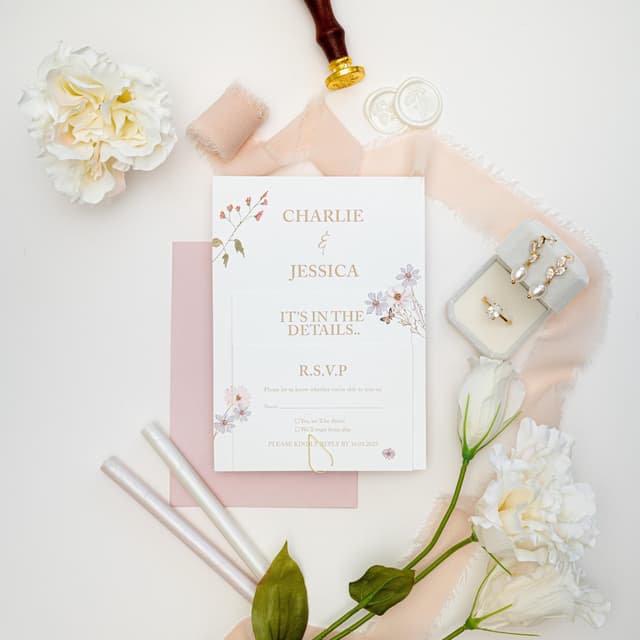
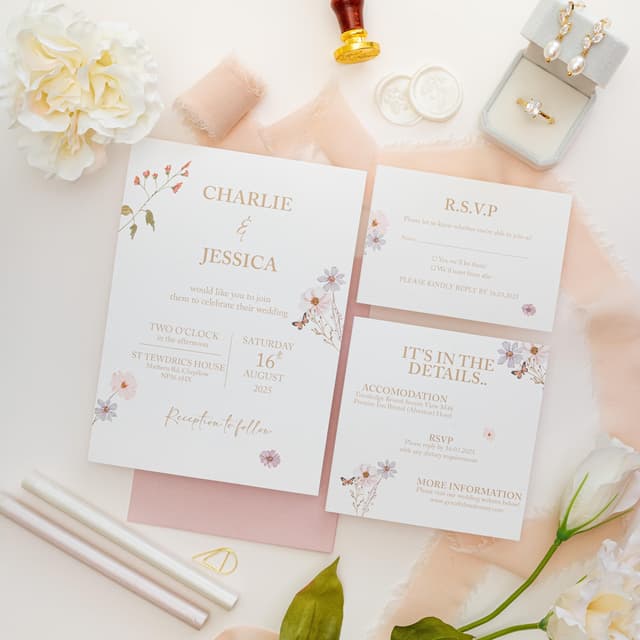
In our suites, the invitation is 5×7, the details card is 120 mm square and the RSVP card is A7 (105 × 74 mm), so every piece is a different shape and the set looks layered when it’s opened.
Paper and card: what to look for
You can’t judge card on a screen, so it’s worth knowing what to ask. Weight is measured in gsm (grams per square metre): the higher the number, the thicker the card. Most wedding invitation card sits somewhere around 300–400 gsm, which feels substantial and won’t bend in the post. Anything much lighter can feel like a flyer.
Texture matters as much as weight. Textured or linen-effect card gives a soft, tactile finish that suits floral and classic designs, while smooth card shows off crisp lines and photographs. Most of our invitations are printed on textured card, and the best way to see the difference is a sample pack.
Finishing touches: ribbon, wax seals, vellum and foil
Finishing touches are what make an invitation feel handmade rather than printed. You don’t need all of them; one or two is usually perfect:
- Satin or silk ribbon ties the suite together and adds colour. Ribbon and a wax seal together is one of the most popular pairings, and for good reason.
- Wax seals add a little weight and ceremony when the envelope is opened. Choose a colour to match your envelope or ribbon.
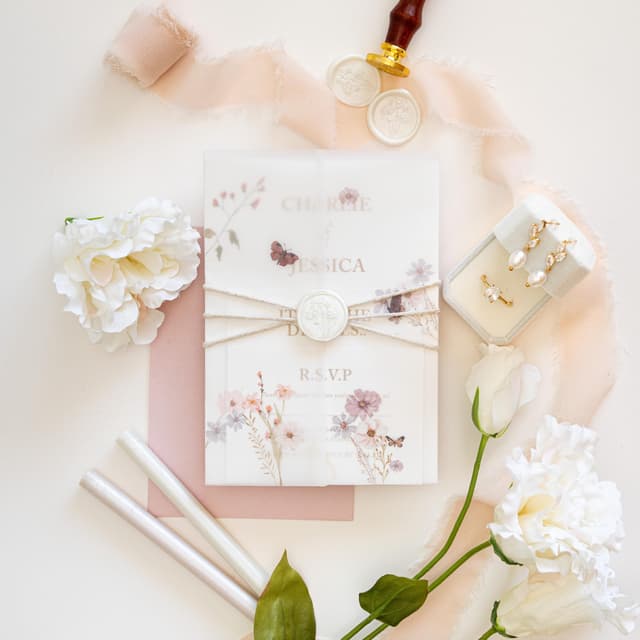
- Vellum is a translucent paper wrapped around the invitation like a jacket, giving a soft, layered first look.
- Gold foil catches the light. It works best used sparingly, on a single motif or your names.
Ready-made design or bespoke?
A ready-made design, personalised with your names and details, is how most couples order. It’s quicker, costs less than fully bespoke stationery, and you can see exactly how it looks before you buy. It usually comes with matching save the dates and on-the-day pieces too, so everything coordinates.
Ready-made doesn’t mean you’re stuck with it as it is. With most of our designs we can change the fonts and background colour, tweak the flower colours on many of them, and lay out whatever wording you like. If you want something entirely new, get in touch and we’ll talk it through.
Printed or digital invitations?
Digital invitations are free to send, but they’re easy to miss in a busy inbox and nobody keeps them. Printed invitations get pinned to fridges, kept in memory boxes and photographed on the morning of the wedding. Many couples now do both: a printed invitation, with a wedding website or QR code for RSVPs and the finer details. You get the keepsake and the convenience.
How to check your proof
Before anything is printed, you’ll receive a digital proof (ours usually arrives within 7 days). This is your last chance to catch mistakes, so check each of these:
- Names: spelling, accents and the order you want them in.
- The date and the day: does 14th August 2027 really fall on a Saturday? (It does.)
- Times: ceremony start or guest arrival time, and that they match across every card.
- Venue: the full address and postcode, spelled the way the venue spells it.
- RSVP date: before your venue’s final-numbers deadline.
- Website, email or phone number: type them out and test them.
- Colours: envelope, ribbon and wax seal choices.
- Quantities: invitations per household, plus spares.
Still deciding what to say? Our wedding invitation wording examples cover everything from formal to relaxed, and our timeline guide shows when to order and send them. We can also print your guests’ names on the envelopes.
Mistakes to avoid
- Choosing a design before you know your household count and budget.
- Ordering A5 without checking the postage.
- Fitting everything onto the invitation. Use a details card or your website instead.
- Mixing styles across your save the dates, invitations and on-the-day stationery.
- Skipping the sample, then being surprised by the card or colours.
- Approving the proof in a hurry.
See it in person first
A sample pack is the most useful thing you can order while you’re choosing. You’ll feel the textured card, see the real colours and open the invitation just as your guests will. Standard sample packs are sent within 4 days.
Frequently asked questions
How do I choose wedding invitations?
+
Count your households and set your budget first, then let your venue and season guide the style. Choose two or three colours, decide on size and finishing touches, order a sample to check the card, and check your proof carefully before printing.
What is the standard wedding invitation size in the UK?
+
5×7 inches (127 × 178 mm) is the most popular size for main invitations in the UK. A6 suits save the dates and evening invitations, and A5 is used for larger statement invitations.
Is A5 too big for a wedding invitation?
+
No, but it needs a larger C5 envelope, which only just fits Royal Mail’s Letter size. With inserts, ribbon or a wax seal it’s likely to post as a Large Letter, so check postage before you commit.
What paper weight is best for wedding invitations?
+
Most wedding invitation card is around 300–400 gsm, which feels sturdy and survives the post. Textured or linen-effect card gives a softer, more luxurious finish than smooth card.
Should my wedding invitations match the rest of my stationery?
+
It isn’t a rule, but using one design across your save the dates, invitations and on-the-day stationery looks considered and makes planning simpler, because you only choose once.
Can I change the colours or fonts on a wedding invitation design?
+
Usually, yes. With most of our designs we can change fonts and background colours, adjust the flower colours on many of them and fit your own wording. Get in touch for fully bespoke changes.
Should I send printed or digital wedding invitations?
+
Printed invitations make a lasting keepsake, while digital tools are convenient for RSVPs. Many couples send a printed invitation and use a wedding website or QR code for replies and details.
More from the Journal
8 min read
Evening Wedding Invitation Wording (UK): Examples, Etiquette and What to Write
Evening wedding invitation wording for UK weddings: formal, relaxed and fun examples, what to write, timings, and RSVPs for evening guests.
6 min read
How to Word No Children at a Wedding: Polite Adults-Only Wording (UK)
How to word no children at a wedding politely: where to say it, adults-only wording for invitations, details cards and websites, and what to say if asked.
7 min read
RSVP Wording for Weddings (UK): Examples for RSVP Cards, Wedding Websites and Polite Reminders
RSVP wording for weddings: UK examples for RSVP cards, menu choices, dietary needs, plus ones, song requests and QR codes, and how to chase late replies.
7 min read
How Many Wedding Invitations Do I Need? A Step-by-Step Calculator for 30 to 200 Guests
How many wedding invitations do you need? Count households, not guests: a step-by-step method, tables for 30–200 guests, spares, evening invites and RSVPs.
8 min read
Dusty Blue Wedding Ideas: Colour Palettes, Decor and Stationery for a Dusty Blue Wedding Theme
Dusty blue wedding ideas: colour palettes that pair with dusty blue, flowers, table decor, bridesmaids, and dusty blue wedding invitations, menus and envelopes.
6 min read
Autumn Wedding Stationery Ideas: Invitations, Colours and Table Stationery for a UK Autumn Wedding
Autumn wedding stationery ideas: autumn colour palettes, invitation motifs, envelope colours, wax seals, when to send invitations, and ideas for barn weddings.
6 min read
Wax Seal Wedding Invitations, Vellum and Ribbon: The Finishing Touches Explained
Wax seal wedding invitations, vellum wraps and ribbon explained: self-adhesive vs traditional wax, seal colours, satin vs silk ribbon and UK postage.
9 min read
How to Assemble Wedding Invitations: Stacking Order, Vellum, Ribbon and Wax Seals, Step by Step
How to assemble wedding invitations step by step: the stacking order, which way cards face, vellum, ribbon, wax seals, RSVP cards and the envelope, with timings.
6 min read
Wedding Invitation Samples: Why to Order Them First and What to Look For in a Sample Pack
Why order wedding invitation samples first: what’s in a sample pack, standard vs personalised samples, how to judge one, and when to order.
7 min read
Bespoke vs Semi-Custom Wedding Stationery: Which Is Right for You?
Bespoke wedding stationery or semi-custom? An honest UK comparison of cost, time, proofs and uniqueness, what you can change, and questions to ask a stationer.
8 min read
Destination Wedding Invitations (UK): Timeline, What to Include and Wording Examples
Destination wedding invitations for UK couples marrying abroad: when to send them, what to include, copyable wording examples, design ideas and posting tips.
7 min read
Wedding Place Card Ideas: Styles, Sizes, Wording and How to Lay Them Out
Wedding place card ideas for UK couples: flat, tent and named menu styles, meal markers, sizes, what to write, children’s cards and how to lay them out.
9 min read
How to Address Wedding Invitations (UK): Envelope Etiquette for Couples, Families and Plus Ones
How to address wedding invitations in the UK, with exact envelope examples for married and unmarried couples, families, plus ones, titles and evening guests.
6 min read
How Much Do Wedding Invitations Cost in the UK? Real Prices and Worked Examples for 100 Guests
How much do wedding invitations cost in the UK? Real prices per invite and per guest, costed examples for 100, 150 and 200 guests, postage and ways to save.
7 min read
Wedding Menu Wording Ideas: Example Menus, Dietary Symbols and Menu Card Ideas (UK)
Wedding menu wording examples to copy: three-course, sharing, alternate drop, choice, evening and drinks menus, plus dietary symbols, sizes and place card ideas.
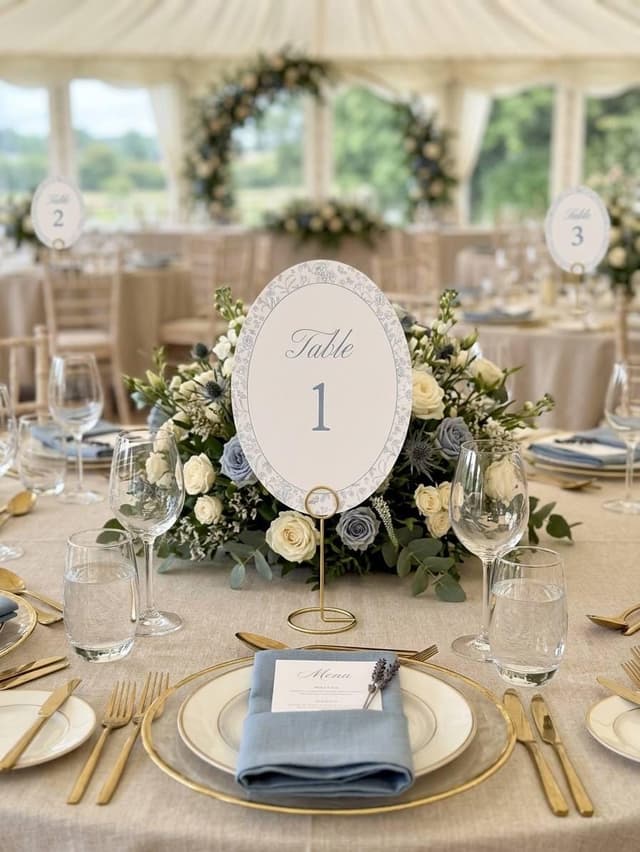
8 min read
Wedding Table Name Ideas: 17 Themes and 200+ Names to Use Instead of Numbers
Over 200 wedding table name ideas instead of numbers: wildflowers, UK places, travels, love words, songs, films, drinks and more, plus how to choose them.
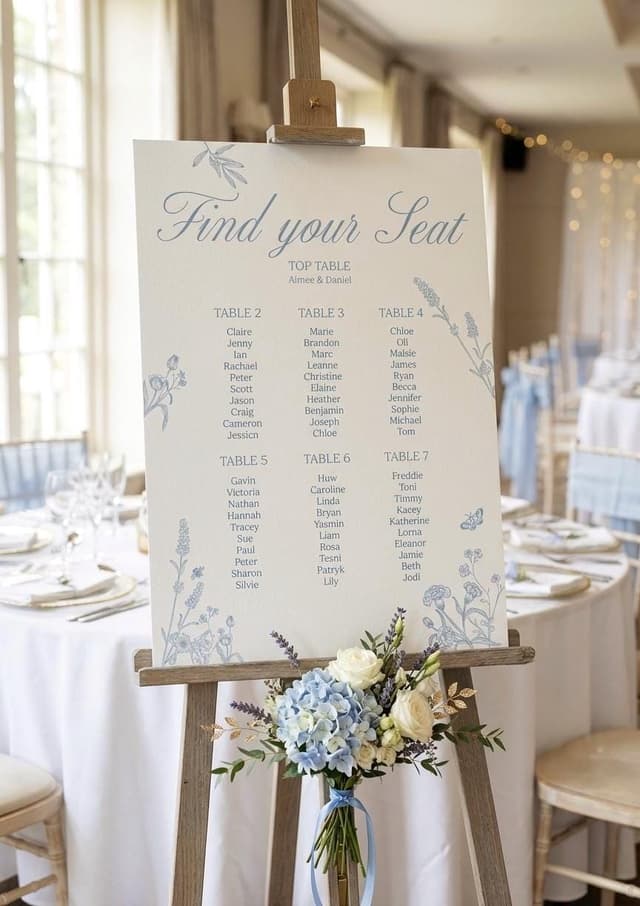
9 min read
Wedding Seating Plan Ideas (UK): How to Plan Who Sits Where, Top Table Etiquette and Board Layouts
Wedding seating plan ideas for UK couples: how to plan who sits where, top table etiquette, round vs long tables, alphabetical vs by-table boards and sizes.
10 min read
How to Ask for Money as a Wedding Gift: Polite Wording and Poems (UK)
How to politely ask for money as a wedding gift in the UK: where to put it, copy-and-paste wording, short and funny poems, plus no gifts and charity wording.
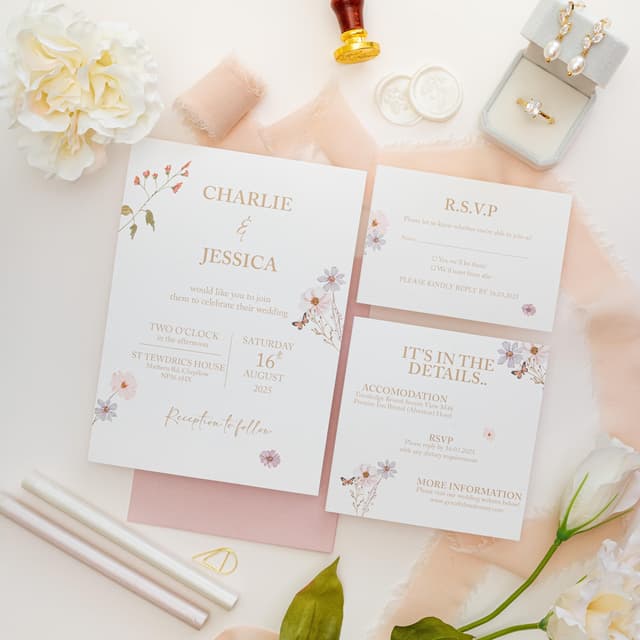
6 min read
What to Put on a Wedding Details Card: Wording Examples, Size and a Full Example
What to put on a wedding details card: accommodation, travel, timings, dress code, gift list, RSVP and QR code, plus wording examples, a full example and sizes.
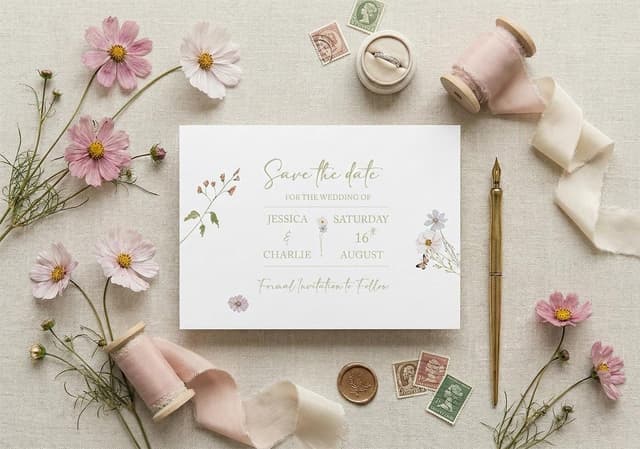
8 min read
Save the Date Wording (UK): What to Write, With 25+ Examples
UK save the date wording examples: classic, relaxed, funny, destination and evening guests, plus what to put on a save the date, who gets one and when to send it.
7 min read
Wedding Stationery Trends 2027: The Invitations, Colours and Details Couples Are Choosing
Wedding stationery trends 2027 from our UK studio: wildflowers, dusty blue toile, ovals, satin bows, wax seals, vellum, named menus and 2027 colour schemes.
9 min read
What to Write in a Wedding Thank You Card: UK Wording Examples for Every Guest
What to write in a wedding thank you card: UK wording examples for money, gifts, parents, guests who didn’t attend, no gift, and when to send them.
5 min read
The Wedding Stationery Checklist (UK): What You Need, What’s Optional and How Many to Order
A complete UK wedding stationery checklist: what you really need, what’s optional on the day, what to skip, and exactly how many invitations, RSVPs, menus and place cards to order, with a worked example.
5 min read
Wedding Invitation Wording Examples (UK): Formal, Relaxed & Everything Between
Copy-and-paste UK wedding invitation wording for every situation: couples hosting, parents hosting, church and civil ceremonies, evening receptions, destination weddings, plus RSVP and details card wording.
3 min read
When to Send Wedding Invitations in the UK (Plus Save the Dates & RSVPs)
When to send save the dates, wedding invitations and evening invitations in the UK, when to set your RSVP date, and when to order your stationery, with a month-by-month timeline and worked examples.
3 min read
Wildflower Wedding Stationery Ideas: From Invitations to the Table
Wildflower wedding stationery ideas for a meadow-inspired day: colour palettes, envelope pairings, matching menus, table numbers and place cards, seasonal UK flowers and finishing touches.